
Posts

Downsizing Tips for Seniors: How To Make The Process Easier

By Patrick Young of the blog AbleUSA.info For many seniors, downsizing makes the most sense after retirement. Living in a smaller home means less to take care of, smaller utility bills and mortgage payments, and the opportunity to stay safe and healthy in order to age in place. It can be physically and emotionally demanding to make a move, however, especially if you have health issues or are making changes after the death of a loved one, so it’s important to look for ways you can make the process as easy as possible. This might mean asking for help in going through your belongings, especially if you’re going to sell or donate any items. Getting organized will help immensely, especially if you have a lot of belongings. Make a plan for each large item by taking photos of your new home so you can get an idea of where they’ll go; this will help you figure out which items will fit and which ones need to be donated, sold, or given to a family member. Keep reading for some great tips on how to make downsizing much easier. Get organizedGetting organized is the key to making the moving process go


Read More »

Building Permits: Why You Need One and How to Get It

As a home improvement guru and self-styled master of DIY projects, you might have the idea that building permits are a nuisance. After all, shouldn’t you be able to just build what you want, where you want on your property? While it’s true that building permits can be a pain, they actually serve a very important role that makes the process worthwhile. We’ll explain why building permits are a thing, why you need one and how to get one. Building Permits and Building CodesTo understand why building permits are important, we need to start by talking about building codes. Building codes, simply put, are the standards put in place by local governments to ensure buildings are constructed using the best methods for your area. While some building codes are practically universal, others vary by your local jurisdiction. If you’re building a deck, for example, how deep your footings need to be will be different depending on where you’re building it—in colder environments with a deeper frost line, footings need to be deeper to be considered safe. In other places, such as coastal areas that regularly deal with high winds, your home’s roof and other features may need to be built

Read More »

Your 7-Item Checklist for an Efficient Air Conditioner

If there’s one thing you don’t want going out on you when you’re in the throes of summer, it’s your AC. Whether you use your home’s air conditioning system regularly or not, these maintenance tips will help you keep your system in great working order when the heat wave comes. 1. Start with your thermostat.When was the last time you replaced your thermostat? If you’ve just moved into your new home, what do you know about it? If it’s been awhile, you might be working with an outdated model. In that case, it’s worth looking into springing for a programmable, energy-efficient thermostat. Most can be controlled remotely from your phone for ultimate savings. 2. Look out for wear on exposed ductwork.Worn ductwork is one of the biggest culprits for cooling loss in your home. Look for visible signs of damage and wear. 3. Check the flow of your air vents.You never know what might be blocking airflow, from furniture to curtains to your child’s toys. Walk room to room and be sure that all the air vents are free of obstructions. We promise it’ll make a difference! 4. Make sure your drain line isn’t clogged.Mounted above your furnace, you should

Read More »

Live in Hail Alley? How to Identify Roof Hail Damage and More

Chances are, you already know if you live in Hail Alley. This stretch of the U.S. extends from Texas to the Dakotas, covering wide swaths of Oklahoma, Kansas, Colorado, Wyoming, Missouri and Nebraska. Hail storms in these areas can be strong and sudden, with the height of hail season occurring every year around June. During a hailstorm, hailstones will drop from 30,000 feet and reach speeds of up to 120 miles per hour before they hit the ground, your car, your house or anything else. While most hail is pea- to marble-sized (1⁄4 inch to 1⁄2 inch in diameter) large storms can produce large hail—in fact, the largest hailstone ever recorded in the U.S. fell in Vivian, SD with a diameter of 8 inches! When these storms come through your area, sometimes the damage left behind is very apparent. A lot of the time it’s not, though, and you need a weather eye (sorry, couldn’t help it) to spot potentially serious damage. Here’s a rundown of places around your house to check for hail damage. Signs of Hail Damage on the RoofYour roof will take the brunt of the damage during a hailstorm, and there are some easy ways to

Read More »

How to Put Together Your First Household Tool Kit

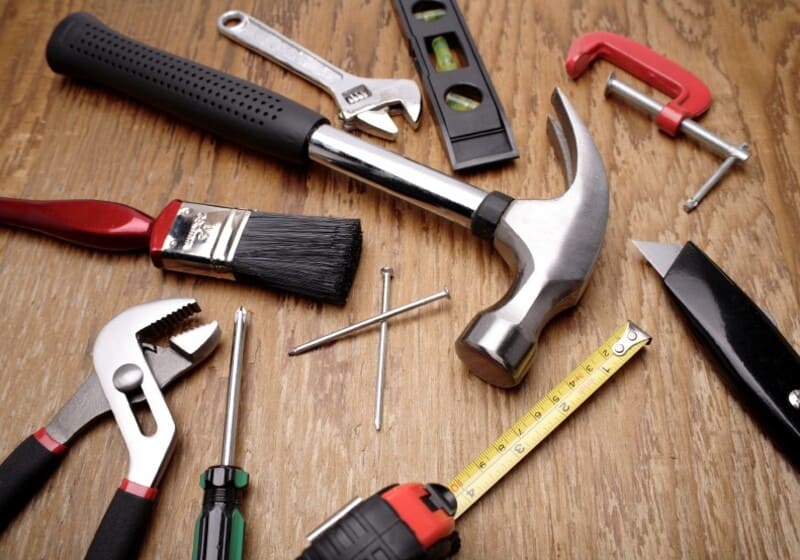
A tool kit is a necessity for any homeowner. Here’s a list of fundamental tools that should be included with any beginner tool kit. HammerYou can never go wrong with the humble hammer. From assembling furniture to hanging pictures, this is a tool you’ll reach for time and time again. Look for a 16 oz. head weight for general DIY projects or a 20 oz. head for demolition work. Utility KnifeOtherwise known as a box cutter, you’ll wonder how you ever got along without one of these. Besides the obvious benefit when it comes to breaking down cardboard boxes, you’ll reach for your utility knife whenever you need to cut sheetrock or drywall, slice fiberglass insulation or scratch out old grout. PliersDifferent types of pliers are perfect for cutting wire or removing nails. You’ll need a small assortment of sizes and types, like needle nose, wire cutting, locking and tongue-and-groove pliers. ScrewdriversWhen it comes to screwdrivers, you’ll need two: a Phillips head and a flat head. While you should be good to go with a medium size in both, it never hurts to go for a set of smaller screwdrivers as well. These can be used for repairing eyeglasses, electronics,

Read More »

After the Home Inspection: When to Request a Repair

When housing markets are hot, buyers have to be flexible when it comes to minor defects in a house they want. Because a home might have multiple competitive offers, it’s important to know how to get yours accepted so you can move into your dream home ASAP. While it would be ideal if the seller offered to fix every issue your home inspector finds, that’s not often realistic. Instead, you need to know which items are potential deal-breakers and which repairs can safely be put off until after closing. We’ll show you when you should request repairs to a home you’re looking at buying, and when asking for a repair could needlessly sink the deal. Don’t Sweat Little IssuesBuying a house is a big investment, so it makes sense that you’d want everything perfect. However, that’s not a reasonable expectation. Unless you’re building your home, every house is a used house, and they’re all going to have idiosyncrasies and blemishes that you’ll have to compromise on. What kinds of things are we talking about? Here’s a handy list: 1. Cosmetic Problems: There might be a crack in a tile, some scratched paint or old carpet you’re not a huge fan

Read More »

Your Guide to Home Composting

Composting can be a little intimidating if you’re new to the game. The good news is that it’s definitely not as hard as it looks. If you’re interested in starting to compost at home but haven’t tried it yet, we’ll tell you everything you need to know. Composting 101At its heart, composting is a process of controlled decomposition. Start with a pile of the waste your household naturally creates—stuff like kitchen scraps, paper, coffee grounds and more (we’ll go further into this later)—and eventually you’ll end up with a batch of rich fertilizer you can use to keep your garden plants growing healthy. Here’s where things get trickier. It matters how you store your compost pile, what you include in the pile and in what ratio, and how often you turn the pile. Technically speaking, you don’t need any special tools to get started with composting. However, if you (or your neighbors) don’t really want to spend your days looking at a pile of compost in your yard, you can buy a container that will hide the potential eyesore. Besides hiding your compost pile, many containers are designed to allow for easier turning of the pile, which speeds up the

Read More »

The Most Important Features for Your Wish List When Searching for an Accessible Home

By Patrick Young of the blog AbleUSA.info House hunting isn’t always a straightforward process. From start to finish, there are so many factors to consider. When you’re looking for a home that is accessible, you have a few extra things to keep in mind. Some homes may already have accessibility features, while others may need some modifications. We’re here to help guide you through it all, from getting started to finding the perfect home and getting ready to move in. Getting StartedIf you’re a first-time house hunter, it’s normal to feel a little overwhelmed by the process. Before you start searching in earnest, familiarize yourself with the steps involved. You need to set a budget and understand the costs, brainstorm about what you’re looking for, and get a feel for how long it all takes. Your overall budget will need to include a down payment, mortgage costs, and other expenses like closing costs. To qualify for a mortgage, it’s important to get a copy of your credit report and do as much as you can to improve your credit score. If you have outstanding debt, you need a plan to address it. This isn’t something that happens overnight; however, be

Read More »

How to Revive a Tired Deck This Summer

As we look forward to a summer filled with backyard barbeques and family get-togethers, it’s probably time to take a little time to evaluate your deck. Are your deck boards greying, washed out or covered in moss and leaf debris? If your deck looks like it took a beating last winter, don’t worry—there’s still time to get it looking great in time for company. Just follow these simple steps for cleaning and re-staining your deck and get ready to show it off! 1. Learn the differences between transparent and opaque deck stain.The first thing to realize when it comes to deck stain is that there is no perfect solution; every type of stain has pros and cons, so you just have to pick the one that’s best for you. Deck stains are available on a spectrum, from totally transparent to completely opaque. Transparent deck stains are best for showing off the natural beauty of your wood, so they’re best used on fresh, new boards. There’s a catch though, as these stains let in more UV light and degrade faster than opaque stains. If you don’t mind having to re-stain your deck more often (about every 6 to 24 months), then

Read More »

5 Must-Ask Questions For Your Home Inspector After the Inspection

When you’re in the middle of buying a home, it’s easy to get lost in the process. One thing you shouldn’t overlook is the opportunity to get answers to essential questions from your home inspector. If you’re not sure where to start, we’ve developed this list of must-ask home inspection questions to help you cover all your bases and completely understand your new home. 1. “Can I get an explanation?”Depending on how many issues your inspector finds, it’s common for their report to be 50 to 90 pages long, which can be daunting. While your inspector will make your report as easy to understand as possible, you shouldn’t be afraid to ask for clarification if you need it—after all, this is one of the biggest investments you’ll ever make, so you want to be sure you understand the home’s issues before you buy. As soon as you receive the home inspection report, go through it carefully and mark any sections that you don’t completely understand. Then call your inspector and ask them to address your questions. 2. “Is this a big problem or a small one?”If your inspection report ends up on the longer side, don’t get overwhelmed. Most issues

Read More »

Downsizing Tips for Seniors: How To Make The Process Easier

By Patrick Young of the blog AbleUSA.info For many seniors, downsizing makes the most sense after retirement. Living in a smaller home means less to take care of, smaller utility bills and mortgage payments, and the opportunity to stay safe and healthy in order to age in place. It can be physically and emotionally demanding to make a move, however, especially if you have health issues or are making changes after the death of a loved one, so it’s important to look for ways you can make the process as easy as possible. This might mean asking for help in going through your belongings, especially if you’re going to sell or donate any items. Getting organized will help immensely, especially if you have a lot of belongings. Make a plan for each large item by taking photos of your new home so you can get an idea of where they’ll go; this will help you figure out which items will fit and which ones need to be donated, sold, or given to a family member. Keep reading for some great tips on how to make downsizing much easier. Get organizedGetting organized is the key to making the moving process go

Read More »

Building Permits: Why You Need One and How to Get It

As a home improvement guru and self-styled master of DIY projects, you might have the idea that building permits are a nuisance. After all, shouldn’t you be able to just build what you want, where you want on your property? While it’s true that building permits can be a pain, they actually serve a very important role that makes the process worthwhile. We’ll explain why building permits are a thing, why you need one and how to get one. Building Permits and Building CodesTo understand why building permits are important, we need to start by talking about building codes. Building codes, simply put, are the standards put in place by local governments to ensure buildings are constructed using the best methods for your area. While some building codes are practically universal, others vary by your local jurisdiction. If you’re building a deck, for example, how deep your footings need to be will be different depending on where you’re building it—in colder environments with a deeper frost line, footings need to be deeper to be considered safe. In other places, such as coastal areas that regularly deal with high winds, your home’s roof and other features may need to be built

Read More »

Your 7-Item Checklist for an Efficient Air Conditioner

If there’s one thing you don’t want going out on you when you’re in the throes of summer, it’s your AC. Whether you use your home’s air conditioning system regularly or not, these maintenance tips will help you keep your system in great working order when the heat wave comes. 1. Start with your thermostat.When was the last time you replaced your thermostat? If you’ve just moved into your new home, what do you know about it? If it’s been awhile, you might be working with an outdated model. In that case, it’s worth looking into springing for a programmable, energy-efficient thermostat. Most can be controlled remotely from your phone for ultimate savings. 2. Look out for wear on exposed ductwork.Worn ductwork is one of the biggest culprits for cooling loss in your home. Look for visible signs of damage and wear. 3. Check the flow of your air vents.You never know what might be blocking airflow, from furniture to curtains to your child’s toys. Walk room to room and be sure that all the air vents are free of obstructions. We promise it’ll make a difference! 4. Make sure your drain line isn’t clogged.Mounted above your furnace, you should

Read More »

Live in Hail Alley? How to Identify Roof Hail Damage and More

Chances are, you already know if you live in Hail Alley. This stretch of the U.S. extends from Texas to the Dakotas, covering wide swaths of Oklahoma, Kansas, Colorado, Wyoming, Missouri and Nebraska. Hail storms in these areas can be strong and sudden, with the height of hail season occurring every year around June. During a hailstorm, hailstones will drop from 30,000 feet and reach speeds of up to 120 miles per hour before they hit the ground, your car, your house or anything else. While most hail is pea- to marble-sized (1⁄4 inch to 1⁄2 inch in diameter) large storms can produce large hail—in fact, the largest hailstone ever recorded in the U.S. fell in Vivian, SD with a diameter of 8 inches! When these storms come through your area, sometimes the damage left behind is very apparent. A lot of the time it’s not, though, and you need a weather eye (sorry, couldn’t help it) to spot potentially serious damage. Here’s a rundown of places around your house to check for hail damage. Signs of Hail Damage on the RoofYour roof will take the brunt of the damage during a hailstorm, and there are some easy ways to

Read More »

How to Put Together Your First Household Tool Kit

A tool kit is a necessity for any homeowner. Here’s a list of fundamental tools that should be included with any beginner tool kit. HammerYou can never go wrong with the humble hammer. From assembling furniture to hanging pictures, this is a tool you’ll reach for time and time again. Look for a 16 oz. head weight for general DIY projects or a 20 oz. head for demolition work. Utility KnifeOtherwise known as a box cutter, you’ll wonder how you ever got along without one of these. Besides the obvious benefit when it comes to breaking down cardboard boxes, you’ll reach for your utility knife whenever you need to cut sheetrock or drywall, slice fiberglass insulation or scratch out old grout. PliersDifferent types of pliers are perfect for cutting wire or removing nails. You’ll need a small assortment of sizes and types, like needle nose, wire cutting, locking and tongue-and-groove pliers. ScrewdriversWhen it comes to screwdrivers, you’ll need two: a Phillips head and a flat head. While you should be good to go with a medium size in both, it never hurts to go for a set of smaller screwdrivers as well. These can be used for repairing eyeglasses, electronics,

Read More »

After the Home Inspection: When to Request a Repair

When housing markets are hot, buyers have to be flexible when it comes to minor defects in a house they want. Because a home might have multiple competitive offers, it’s important to know how to get yours accepted so you can move into your dream home ASAP. While it would be ideal if the seller offered to fix every issue your home inspector finds, that’s not often realistic. Instead, you need to know which items are potential deal-breakers and which repairs can safely be put off until after closing. We’ll show you when you should request repairs to a home you’re looking at buying, and when asking for a repair could needlessly sink the deal. Don’t Sweat Little IssuesBuying a house is a big investment, so it makes sense that you’d want everything perfect. However, that’s not a reasonable expectation. Unless you’re building your home, every house is a used house, and they’re all going to have idiosyncrasies and blemishes that you’ll have to compromise on. What kinds of things are we talking about? Here’s a handy list: 1. Cosmetic Problems: There might be a crack in a tile, some scratched paint or old carpet you’re not a huge fan

Read More »

Your Guide to Home Composting

Composting can be a little intimidating if you’re new to the game. The good news is that it’s definitely not as hard as it looks. If you’re interested in starting to compost at home but haven’t tried it yet, we’ll tell you everything you need to know. Composting 101At its heart, composting is a process of controlled decomposition. Start with a pile of the waste your household naturally creates—stuff like kitchen scraps, paper, coffee grounds and more (we’ll go further into this later)—and eventually you’ll end up with a batch of rich fertilizer you can use to keep your garden plants growing healthy. Here’s where things get trickier. It matters how you store your compost pile, what you include in the pile and in what ratio, and how often you turn the pile. Technically speaking, you don’t need any special tools to get started with composting. However, if you (or your neighbors) don’t really want to spend your days looking at a pile of compost in your yard, you can buy a container that will hide the potential eyesore. Besides hiding your compost pile, many containers are designed to allow for easier turning of the pile, which speeds up the

Read More »

The Most Important Features for Your Wish List When Searching for an Accessible Home

By Patrick Young of the blog AbleUSA.info House hunting isn’t always a straightforward process. From start to finish, there are so many factors to consider. When you’re looking for a home that is accessible, you have a few extra things to keep in mind. Some homes may already have accessibility features, while others may need some modifications. We’re here to help guide you through it all, from getting started to finding the perfect home and getting ready to move in. Getting StartedIf you’re a first-time house hunter, it’s normal to feel a little overwhelmed by the process. Before you start searching in earnest, familiarize yourself with the steps involved. You need to set a budget and understand the costs, brainstorm about what you’re looking for, and get a feel for how long it all takes. Your overall budget will need to include a down payment, mortgage costs, and other expenses like closing costs. To qualify for a mortgage, it’s important to get a copy of your credit report and do as much as you can to improve your credit score. If you have outstanding debt, you need a plan to address it. This isn’t something that happens overnight; however, be

Read More »

How to Revive a Tired Deck This Summer

As we look forward to a summer filled with backyard barbeques and family get-togethers, it’s probably time to take a little time to evaluate your deck. Are your deck boards greying, washed out or covered in moss and leaf debris? If your deck looks like it took a beating last winter, don’t worry—there’s still time to get it looking great in time for company. Just follow these simple steps for cleaning and re-staining your deck and get ready to show it off! 1. Learn the differences between transparent and opaque deck stain.The first thing to realize when it comes to deck stain is that there is no perfect solution; every type of stain has pros and cons, so you just have to pick the one that’s best for you. Deck stains are available on a spectrum, from totally transparent to completely opaque. Transparent deck stains are best for showing off the natural beauty of your wood, so they’re best used on fresh, new boards. There’s a catch though, as these stains let in more UV light and degrade faster than opaque stains. If you don’t mind having to re-stain your deck more often (about every 6 to 24 months), then

Read More »

5 Must-Ask Questions For Your Home Inspector After the Inspection

When you’re in the middle of buying a home, it’s easy to get lost in the process. One thing you shouldn’t overlook is the opportunity to get answers to essential questions from your home inspector. If you’re not sure where to start, we’ve developed this list of must-ask home inspection questions to help you cover all your bases and completely understand your new home. 1. “Can I get an explanation?”Depending on how many issues your inspector finds, it’s common for their report to be 50 to 90 pages long, which can be daunting. While your inspector will make your report as easy to understand as possible, you shouldn’t be afraid to ask for clarification if you need it—after all, this is one of the biggest investments you’ll ever make, so you want to be sure you understand the home’s issues before you buy. As soon as you receive the home inspection report, go through it carefully and mark any sections that you don’t completely understand. Then call your inspector and ask them to address your questions. 2. “Is this a big problem or a small one?”If your inspection report ends up on the longer side, don’t get overwhelmed. Most issues

Read More »