Tag: Haunted Places Series

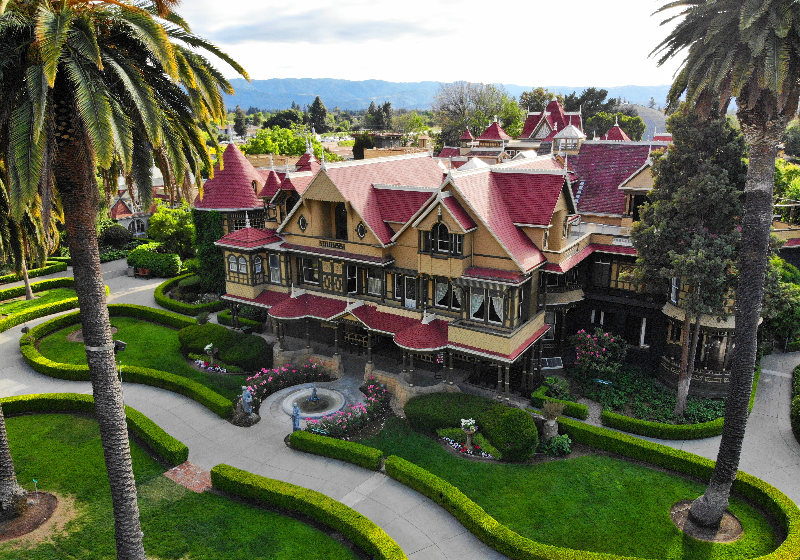
Haunted Places Series: Winchester Mystery House

Location: San Jose, CaliforniaArchitectural Style: Exterior: Queen Anne-Style Victorian; Interior: Aesthetic MovementBuilt: 1886 – 1922 As we progress through the Halloween season, we thought there was no location more appropriate to visit than one of the most notoriously unusual architectural wonders of North America – and the tale of the woman behind it all. For our next entry, we visit the Winchester Mystery House. Sarah PardeeSarah Lockwood Pardee was born in 1839 in New Haven, Connecticut. In her upper-class New England home, Sarah had by all accounts a happy childhood with access to fantastic education, going on to learn four foreign languages (Latin, French, Spanish, and Italian). Pardee studied at Yale College’s associated female scholastic institution and became known for both her extraordinary intelligence and her beauty. Called the “Belle of New Haven,” Sarah had many admirers. In 1862, Sarah married William Wirt Winchester, a brother to one of her classmates and member of a wealthy New Haven family. William was an only son and, therefore, sole heir to his father’s considerable manufacturing company, the Winchester Repeating Arms Company. William and Sarah Winchester were a well-off, idyllic young couple, but early on, tragedy beset the Winchesters. In 1866, Sarah gave

Read More »

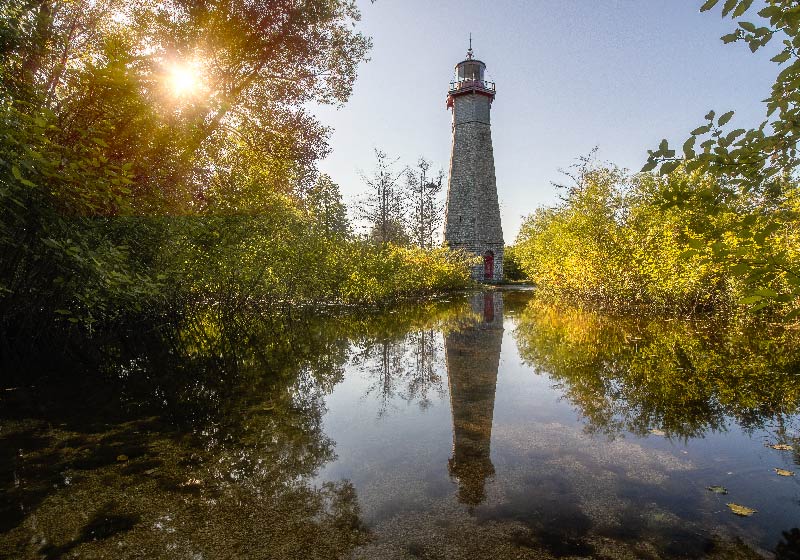
Haunted Places Series: Gibraltar Point Lighthouse

Location: Toronto, Ontario, CanadaArchitectural Style: Hexagonal LimestoneBuilt: 1808 With each passing week, we take another trip across North America to some of the most intriguing (and possibly haunted) structures standing today. This week features a last vestige of war and a mysterious disappearance. On the banks of Lake Ontario, we’re visiting Toronto’s own Gibraltar Point Lighthouse! HistoryAs commissioned in 1803, the Gibraltar Point Lighthouse was one of three Lighthouses erected with the intention to bolster the town of York’s defenses while tensions remained uneasy between northern British holdings and the newly established United States. Gibraltar Point was a peninsula named after the famous, strategic territory overseeing the strait between Spain and Morocco. The peninsula in Lake Ontario was thought to serve a similar purpose as a powerful fortifying point, intended to protect traveling British vessels. By 1808, the construction was complete and the Gibraltar Point Lighthouse was brought fully into service. Quickly, the lighthouse saw considerable action, standing sentinel during the War of 1812 and standing as direct witness to 1813’s Battle of York. Over its lifetime, the lighthouse watched York become the city of Toronto, and the peninsula it stood on transformed into the Toronto Islands. Today, the Gibraltar

Read More »

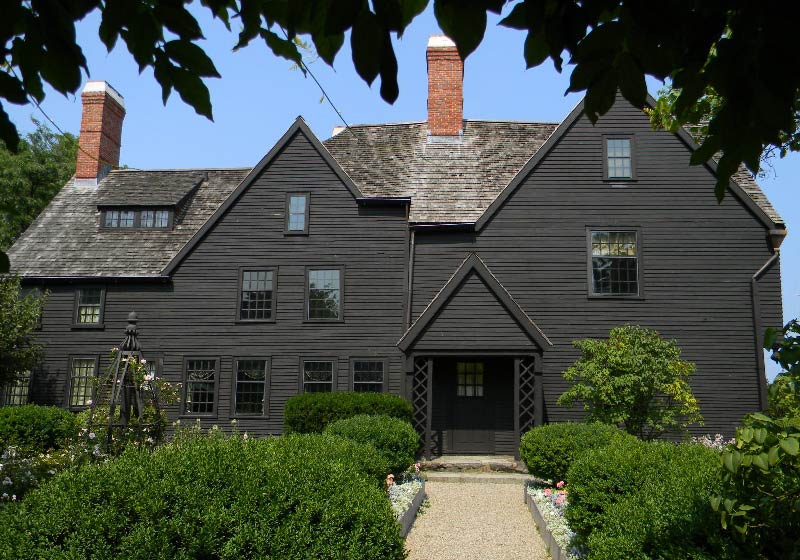
Haunted Places Series: House of the Seven Gables

Location: Salem, MassachusettsArchitectural Style: Colonial, GeorgianBuilt: 1668 For our next entry in this year’s Haunted Places Series, get ready for falling leaves, a legendary author, and a set of infamous trials. This week, we visit the historic House of the Seven Gables. BackgroundIn the height of Puritan New England, Captain John Turner I constructed a home for his family on the coast of Massachusetts Bay. This simple two-story, two-room home circled a tall chimney in its first iteration and would expand considerably over the years. Features would be added, removed, and added back again to match various styles over the decades, but its famed “seven gables” would become the home’s most iconic feature. From the Turner family’s hands, the property would be sold to another family of wealthy sailors in the Ingersoll family by 1782. From this, the home gained the colloquial name of the Turner-Ingersoll Mansion. However, it was during this time that Nathaniel Hawthorne, a relative of the Ingersolls, would begin to visit in order to spend time with his cousin Susannah Ingersoll. Though the historic home had already established itself within Salem’s history, it was this association that won the home its fame. Photo by State Library

Read More »

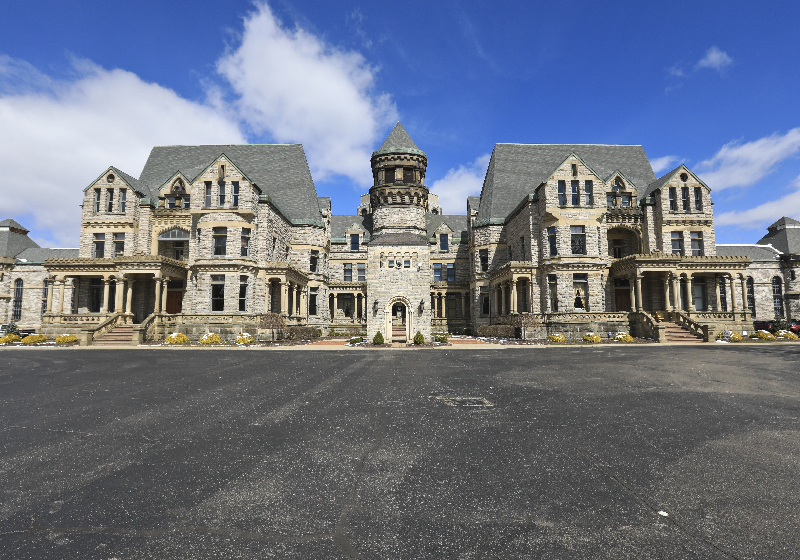
Haunted Places Series: Ohio State Reformatory

Location: Mansfield, OhioArchitectural Style: Romanesque RevivalBuilt: 1886–1910 There’s an eerie chill in the air and the souls of the restless are stirring. This can only mean one thing . . . the return of our haunted place series! Every year, we break from our usual content to visit some of the strangest, most unsettling locales of the U.S. and Canada in celebration of the spooky season. This year, our first edition was a clear lock: the Ohio State Reformatory! The Reformatory Founded as a holding for intermediate first-time offenders, the Ohio State Reformatory, also known as the Mansfield Reformatory, was designed with rehabilitation in mind. Even today, its beautiful arches and bright brick exterior make this defunct prison appear more like a mansion or a castle. These design choices were purposeful, intended to inspire all who enter its halls. In this setting, inmates would learn practical trades (such as engineering or plumbing) and invest into skills meant to turn their lives around. This system worked remarkably in those initial years. Compared to other reformatory facilities, convicts who finished serving their sentences at Mansfield were considerably less likely to become repeat offenders. In fact, Mansfield boasted one of the lowest re-sentencing

Read More »

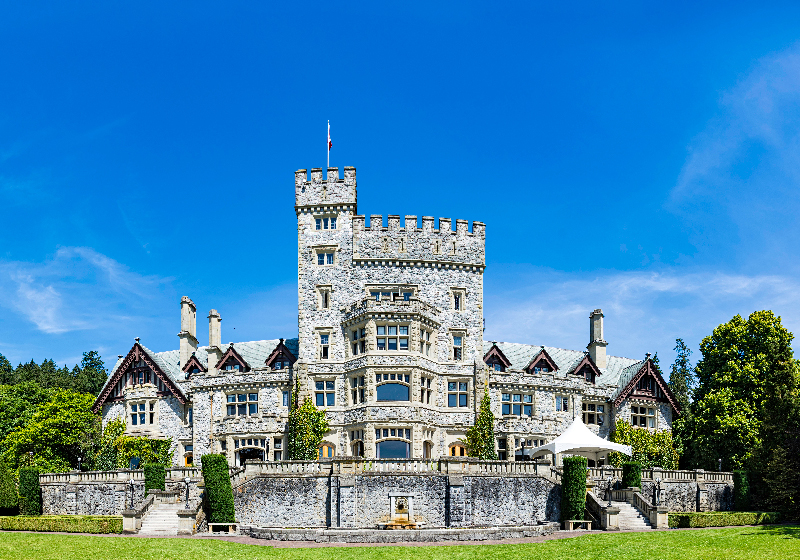
Haunted Places Series: Hatley Castle

Location: Victoria, Vancouver Island, BCArchitectural Style: Gothic RevivalBuilt: 1908 Rounding out our 2021 Haunted Places series is a major historical landmark near the coast of Vancouver Island. Opposite of another stunning (and spooky) castle, Hatley is surrounded by beautiful grounds lined with blossoming flowers. But what draws many visitors is the chance to capture something more out of the ordinary. James Dunsmuir Commissions the Castle Lieutenant-Governor James Dunsmuir, son of coal-magnate Robert Dunsmuir, ordered construction of the castle on Hatley Park. James originally planned the grounds to be used as a farm, complete with a dairy and hunting grounds for James and his friends. Enlisting the help of Victorian architect Samuel Maclure, James envisioned a commanding and lavish home. Cost was no obstacle for James, and it shows in the final details. All in all, the sprawling estate would feature 40 rooms, an 82-foot turret, surrounding stone wall, cow stables, smoke house, and other workstations. Hatley Park and the castle would remain owned by the Dunsmuir family until the latter half of the 1930s. Hatley Castle and the Military After the Dunsmuir family sold the estate, the Dominion Government purchased it and used it as a Naval Training Establishment. The

Read More »

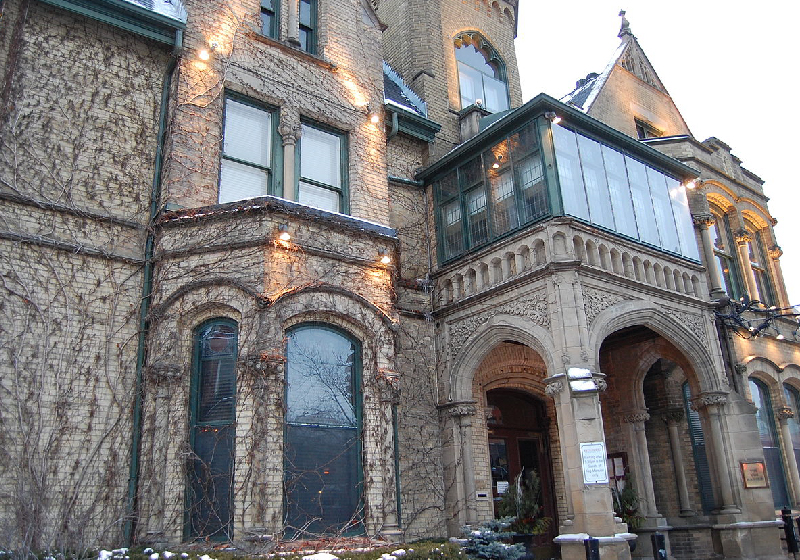
Haunted Places Series: Keg Mansion

Location: Toronto, OntarioArchitectural Style: GothicBuilt: 1868 For our next haunted location, we’re headed up north to “The Heartland Province.” Famous for its diverse population and accredited universities, Toronto is one of North America’s largest and most intriguing cities. Coincidentally, the Queen City is also known for having one of the most haunted houses in Canada. Construction of Keg Mansion In Victorian-era Toronto, Jarvis Street was the symbol of high society. Elaborate mansions lined the street with each one as unique as the last. Built in 1867 by Arthur McMaster, Keg Mansion boasted an ornate interior and exterior. The red shingles and green brass window accents pop against the neutral brick. Soft colors inside line the 26 different rooms and 17 fireplaces. The home would be bought in 1882 by the Cleveland agricultural equipment salesman Hart Massey, and his wife. The Masseys added a turret, verandah, and a greenhouse, but left much of the original decoration untouched. The Massey Family The Masseys quickly became one of the most prominent families in the city. In fact, Hart Massey helped fund buildings at the University of Toronto, such as Massey Hall. After Hart’s death, his daughter Lillian took over his estate and named

Read More »

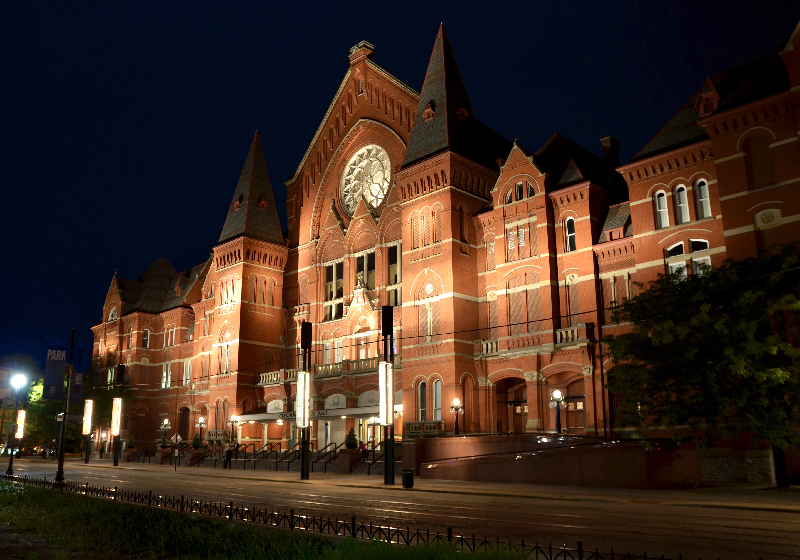
Haunted Places Series: Cincinnati Music Hall

Location: Cincinnati, OhioArchitectural Style: Venetian Gothic, Victorian Gothic Revival StyleBuilt: 1878 “It’s alive!” The leaves are changing, there’s a haunting chill in the air, and spookiest of all, our Haunted Places series has been resurrected! We’re loaded up for another road trip to some of the most paranormal places across the United States and Canada. Our first stop plays host to one of the oldest baseball teams, world-class chili, Steven Spielberg, and plenty of ghostly citizens–you guessed it, it’s “The Queen City” AKA Cincinnati! The Elaborate Cincinnati Music Hall It comes as no surprise that a city as historically rich as Cincinnati has a building to match. The Cincinnati Music Hall was built in 1878 to replace the older temporary Exposition Hall. Funding for the Music Hall was started by the affluent Reuben R. Springer, who campaigned for donations from other citizens and socialites. Designed by Samuel Hannaford, Music Hall stands as one of the last Venetian Gothic buildings that were part of the Victorian Gothic Revival Style. Music Hall has been the home of the Cincinnati Ballet, Symphony Orchestra, Opera, May Festival Chorus, and the Cincinnati Pops Orchestra. It also served as the main convention center for the city

Read More »

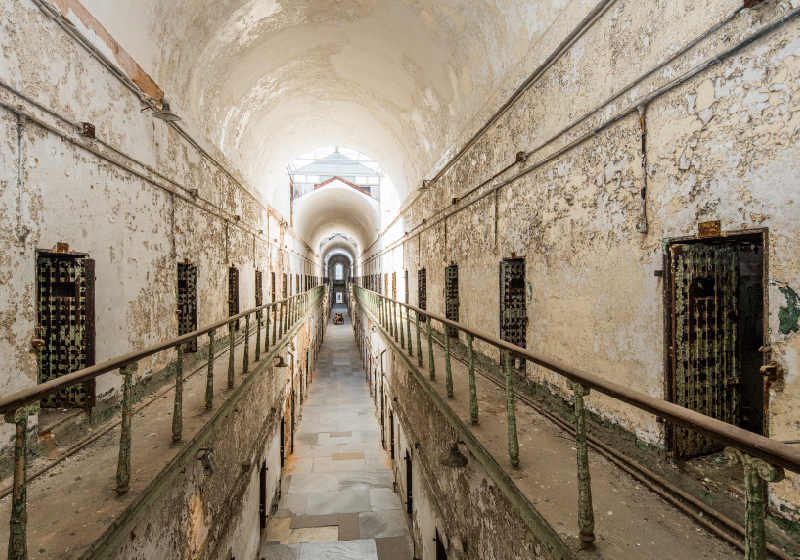
Haunted Places Series: Eastern State Penitentiary

Location: Philadelphia, PennsylvaniaArchitectural Style: GothicBuilt: 1829 Located near the bustling center of Philadelphia, Eastern State Penitentiary blends right in alongside the city’s historic architecture. Yet while the outside may seem picturesque, the sprawling compound’s interior is marred by a darker past. Designed to be a place for inmates to redeem themselves from their crimes, Eastern State Penitentiary turned into many a prisoner’s personal nightmare. Eastern State Paves the WayCompleted in early 1829, Eastern State Penitentiary was the first prison of its kind and remained in operation until 1971. After it was constructed, Eastern State was the most elaborate and expensive prison in the world, and it would be a model for more than 300 prisons. Eastern State was designed so that each cell would be more like solitary confinement than a typical holding cell. There were no bars to provide a view to the rest of the building, few windows to the outside and prisoners were even kept apart from each other when out of their cells. Religion and Reformation Unlike previous centers simply meant to hold an offender until their release, Eastern State took things one step further by implementing religious themes into the structure of the building and

Read More »

Haunted Places Series: Winchester Mystery House

Location: San Jose, CaliforniaArchitectural Style: Exterior: Queen Anne-Style Victorian; Interior: Aesthetic MovementBuilt: 1886 – 1922 As we progress through the Halloween season, we thought there was no location more appropriate to visit than one of the most notoriously unusual architectural wonders of North America – and the tale of the woman behind it all. For our next entry, we visit the Winchester Mystery House. Sarah PardeeSarah Lockwood Pardee was born in 1839 in New Haven, Connecticut. In her upper-class New England home, Sarah had by all accounts a happy childhood with access to fantastic education, going on to learn four foreign languages (Latin, French, Spanish, and Italian). Pardee studied at Yale College’s associated female scholastic institution and became known for both her extraordinary intelligence and her beauty. Called the “Belle of New Haven,” Sarah had many admirers. In 1862, Sarah married William Wirt Winchester, a brother to one of her classmates and member of a wealthy New Haven family. William was an only son and, therefore, sole heir to his father’s considerable manufacturing company, the Winchester Repeating Arms Company. William and Sarah Winchester were a well-off, idyllic young couple, but early on, tragedy beset the Winchesters. In 1866, Sarah gave
Read More »

Haunted Places Series: Gibraltar Point Lighthouse

Location: Toronto, Ontario, CanadaArchitectural Style: Hexagonal LimestoneBuilt: 1808 With each passing week, we take another trip across North America to some of the most intriguing (and possibly haunted) structures standing today. This week features a last vestige of war and a mysterious disappearance. On the banks of Lake Ontario, we’re visiting Toronto’s own Gibraltar Point Lighthouse! HistoryAs commissioned in 1803, the Gibraltar Point Lighthouse was one of three Lighthouses erected with the intention to bolster the town of York’s defenses while tensions remained uneasy between northern British holdings and the newly established United States. Gibraltar Point was a peninsula named after the famous, strategic territory overseeing the strait between Spain and Morocco. The peninsula in Lake Ontario was thought to serve a similar purpose as a powerful fortifying point, intended to protect traveling British vessels. By 1808, the construction was complete and the Gibraltar Point Lighthouse was brought fully into service. Quickly, the lighthouse saw considerable action, standing sentinel during the War of 1812 and standing as direct witness to 1813’s Battle of York. Over its lifetime, the lighthouse watched York become the city of Toronto, and the peninsula it stood on transformed into the Toronto Islands. Today, the Gibraltar

Read More »

Haunted Places Series: House of the Seven Gables

Location: Salem, MassachusettsArchitectural Style: Colonial, GeorgianBuilt: 1668 For our next entry in this year’s Haunted Places Series, get ready for falling leaves, a legendary author, and a set of infamous trials. This week, we visit the historic House of the Seven Gables. BackgroundIn the height of Puritan New England, Captain John Turner I constructed a home for his family on the coast of Massachusetts Bay. This simple two-story, two-room home circled a tall chimney in its first iteration and would expand considerably over the years. Features would be added, removed, and added back again to match various styles over the decades, but its famed “seven gables” would become the home’s most iconic feature. From the Turner family’s hands, the property would be sold to another family of wealthy sailors in the Ingersoll family by 1782. From this, the home gained the colloquial name of the Turner-Ingersoll Mansion. However, it was during this time that Nathaniel Hawthorne, a relative of the Ingersolls, would begin to visit in order to spend time with his cousin Susannah Ingersoll. Though the historic home had already established itself within Salem’s history, it was this association that won the home its fame. Photo by State Library

Read More »

Haunted Places Series: Ohio State Reformatory

Location: Mansfield, OhioArchitectural Style: Romanesque RevivalBuilt: 1886–1910 There’s an eerie chill in the air and the souls of the restless are stirring. This can only mean one thing . . . the return of our haunted place series! Every year, we break from our usual content to visit some of the strangest, most unsettling locales of the U.S. and Canada in celebration of the spooky season. This year, our first edition was a clear lock: the Ohio State Reformatory! The Reformatory Founded as a holding for intermediate first-time offenders, the Ohio State Reformatory, also known as the Mansfield Reformatory, was designed with rehabilitation in mind. Even today, its beautiful arches and bright brick exterior make this defunct prison appear more like a mansion or a castle. These design choices were purposeful, intended to inspire all who enter its halls. In this setting, inmates would learn practical trades (such as engineering or plumbing) and invest into skills meant to turn their lives around. This system worked remarkably in those initial years. Compared to other reformatory facilities, convicts who finished serving their sentences at Mansfield were considerably less likely to become repeat offenders. In fact, Mansfield boasted one of the lowest re-sentencing

Read More »

Haunted Places Series: Hatley Castle

Location: Victoria, Vancouver Island, BCArchitectural Style: Gothic RevivalBuilt: 1908 Rounding out our 2021 Haunted Places series is a major historical landmark near the coast of Vancouver Island. Opposite of another stunning (and spooky) castle, Hatley is surrounded by beautiful grounds lined with blossoming flowers. But what draws many visitors is the chance to capture something more out of the ordinary. James Dunsmuir Commissions the Castle Lieutenant-Governor James Dunsmuir, son of coal-magnate Robert Dunsmuir, ordered construction of the castle on Hatley Park. James originally planned the grounds to be used as a farm, complete with a dairy and hunting grounds for James and his friends. Enlisting the help of Victorian architect Samuel Maclure, James envisioned a commanding and lavish home. Cost was no obstacle for James, and it shows in the final details. All in all, the sprawling estate would feature 40 rooms, an 82-foot turret, surrounding stone wall, cow stables, smoke house, and other workstations. Hatley Park and the castle would remain owned by the Dunsmuir family until the latter half of the 1930s. Hatley Castle and the Military After the Dunsmuir family sold the estate, the Dominion Government purchased it and used it as a Naval Training Establishment. The

Read More »

Haunted Places Series: Keg Mansion

Location: Toronto, OntarioArchitectural Style: GothicBuilt: 1868 For our next haunted location, we’re headed up north to “The Heartland Province.” Famous for its diverse population and accredited universities, Toronto is one of North America’s largest and most intriguing cities. Coincidentally, the Queen City is also known for having one of the most haunted houses in Canada. Construction of Keg Mansion In Victorian-era Toronto, Jarvis Street was the symbol of high society. Elaborate mansions lined the street with each one as unique as the last. Built in 1867 by Arthur McMaster, Keg Mansion boasted an ornate interior and exterior. The red shingles and green brass window accents pop against the neutral brick. Soft colors inside line the 26 different rooms and 17 fireplaces. The home would be bought in 1882 by the Cleveland agricultural equipment salesman Hart Massey, and his wife. The Masseys added a turret, verandah, and a greenhouse, but left much of the original decoration untouched. The Massey Family The Masseys quickly became one of the most prominent families in the city. In fact, Hart Massey helped fund buildings at the University of Toronto, such as Massey Hall. After Hart’s death, his daughter Lillian took over his estate and named

Read More »

Haunted Places Series: Cincinnati Music Hall

Location: Cincinnati, OhioArchitectural Style: Venetian Gothic, Victorian Gothic Revival StyleBuilt: 1878 “It’s alive!” The leaves are changing, there’s a haunting chill in the air, and spookiest of all, our Haunted Places series has been resurrected! We’re loaded up for another road trip to some of the most paranormal places across the United States and Canada. Our first stop plays host to one of the oldest baseball teams, world-class chili, Steven Spielberg, and plenty of ghostly citizens–you guessed it, it’s “The Queen City” AKA Cincinnati! The Elaborate Cincinnati Music Hall It comes as no surprise that a city as historically rich as Cincinnati has a building to match. The Cincinnati Music Hall was built in 1878 to replace the older temporary Exposition Hall. Funding for the Music Hall was started by the affluent Reuben R. Springer, who campaigned for donations from other citizens and socialites. Designed by Samuel Hannaford, Music Hall stands as one of the last Venetian Gothic buildings that were part of the Victorian Gothic Revival Style. Music Hall has been the home of the Cincinnati Ballet, Symphony Orchestra, Opera, May Festival Chorus, and the Cincinnati Pops Orchestra. It also served as the main convention center for the city

Read More »

Haunted Places Series: Eastern State Penitentiary

Location: Philadelphia, PennsylvaniaArchitectural Style: GothicBuilt: 1829 Located near the bustling center of Philadelphia, Eastern State Penitentiary blends right in alongside the city’s historic architecture. Yet while the outside may seem picturesque, the sprawling compound’s interior is marred by a darker past. Designed to be a place for inmates to redeem themselves from their crimes, Eastern State Penitentiary turned into many a prisoner’s personal nightmare. Eastern State Paves the WayCompleted in early 1829, Eastern State Penitentiary was the first prison of its kind and remained in operation until 1971. After it was constructed, Eastern State was the most elaborate and expensive prison in the world, and it would be a model for more than 300 prisons. Eastern State was designed so that each cell would be more like solitary confinement than a typical holding cell. There were no bars to provide a view to the rest of the building, few windows to the outside and prisoners were even kept apart from each other when out of their cells. Religion and Reformation Unlike previous centers simply meant to hold an offender until their release, Eastern State took things one step further by implementing religious themes into the structure of the building and

Read More »