
Tag: electrical

Make Your Home Fire-Safe this October

October is here! While this autumnal month is most commonly associated with tricks and treats, it’s also recognized in both the United States and Canada as Fire Prevention Month. The first week of October has also been designated Fire Prevention Week in both countries. Close to 360,000 home fires occur annually, with many of them being preventable. To make your home fire-safe this year, here’s what you need to know. Have multiple fire extinguishers at the ready. A portable fire extinguisher can help stop a fire before it gets out of control. According to the National Association of Fire Equipment Distributors (NAFED), fire extinguishers are successful in extinguishing 95 percent of house fires. When they can’t fully put out a fire, extinguishers can effectively contain it until emergency services arrive. There are different variations of fire extinguishers, so it’s important that you have the right style for your home. Keep one on each level of your house in places where there are lots of appliances, mechanical equipment, or chemicals. Clean out your dryer’s lint trap. If it’s been a while since you last cleaned your dryer’s lint trap (or if you never have), start making it a regular habit. Lint
Read More »

Should You Get a Builder’s Warranty Inspection?

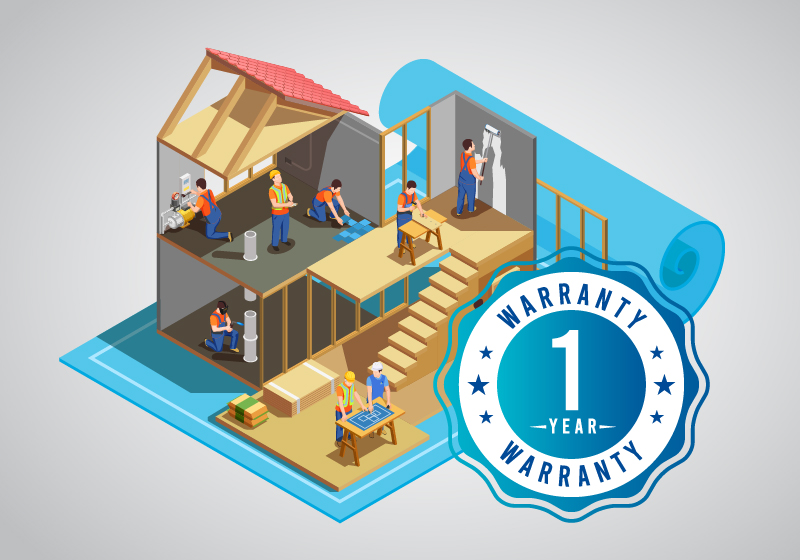
There’s no feeling quite like moving into your dream home, especially if you’ve watched with anticipation as it was being built from the ground up. If it’s your first home, then there’s double the cause for celebration! There can be a lot to learn about your home, from the foundation to the water heater, and you want to be sure that everything is functioning properly before your one-year warranty expires. That’s why it’s always a smart decision to get a builder’s warranty inspection. What’s a builder’s warranty and what does it do? After your home is finished, your builder will likely offer you a one-year warranty. This warranty is intended to cover any needed repairs up to one year after you’ve moved in. You protect yourself from any damage to your home, and it helps keep the builder accountable for their work. Getting a home inspection before your builder’s warranty expires will help catch potential issues early on, and could potentially save you thousands of dollars down the road. Aren’t you fine with just a municipal inspection? Your new home was likely assessed by municipal inspectors from the city or county to ensure it was safe to live in before

Read More »

Celebrate Home Safety Month by Improving Your Home!

With June being National Home Safety Month in both the United States and Canada, it’s a great opportunity for you to give your house a thorough checkup! Even if you just moved into a new build, there could still be any number of hidden issues with its components. Take some time over the next month to protect you and your family from some of these commonly overlooked problems. Radon Reduction Radon is very common in both the U.S. and Canada, and it’s the second leading cause of lung cancer. It’s an odorless and colorless gas which makes it practically impossible to detect without some sort of monitoring device. Homes both old and new are susceptible to radon, so you shouldn’t assume you’re completely free of it. The most effective way to know how much radon is in your home is to buy a tester. Consistent testing lets you keep an eye on accumulation levels so that you can act quickly to stay safe. Check Wiring Electrical fires account for nearly 24,000 home fires each year. Your home’s wiring is one of its largest components, so you need to be certain it’s in top condition. Loose outlets should be repaired or

Read More »

Top 10 Summer Home Maintenance Projects

Summer is the perfect time to tackle all those big tasks on your to-do list. Here are the top 10 chores you should do to keep your home looking great and its components running smoothly. Clean Your HVAC Cleaning your HVAC system can help prolong its life and improve its efficiency. Inside your home: Outside your home: Clean Your Grill Grease accumulation on your grill could present a fire hazard. Consider a cleaning routine after each use, and a more detailed cleaning 1-2 times per season. Deck and Patio Maintenance Lack of maintenance with your deck can present numerous safety issues. In addition, a run-down deck can detract from your home’s curb appeal. Pest Control Warmer weather brings about more wildlife, which can be both a concern to your home’s physical structure and your personal health. It’s a good idea to have your home professionally treated on a scheduled basis. Clean Ceiling Fans One of the possible reasons your fan “wobbles” while running is that the fan blades have a dust or dirt buildup. Clean Window Screens Cleaning your windows is one of those routine maintenance items that’s often forgotten. Generally, all you’ll need is a bucket of water with

Read More »

5 Easy Ways to Save on Your AC Bill

Everyone looks forward to the warm weather that the summer season brings–until it turns their house into a sauna. With above-average temperatures projected for this year, you might find yourself staying inside more and cranking up the air in an effort to beat the heat. However, running your AC on high all summer puts a strain on your cooling system and your bank account. Here are our tips on how you can still keep cool, extend your HVAC’s life, and lower your bills all at once! 1. Open Things UpIt seems counterproductive to open your house during a heat wave, but doing so during certain periods of the day can actually help cool it off. The early morning or late night hours tend to be cooler than the middle of the day and you can use it to your advantage. A nice, refreshing breeze through your home simulates your air conditioner and blows out all that stuffy air that comes from keeping your house sealed up. Check out the weather forecast to determine the best time to crack your windows. Setting up a few box fans by your windows can really get air moving. 2. Block Out Direct RaysYour home’s

Read More »

How to Keep Your Oven Clean and Safe

Being inside for the majority of last year may have given you more time to try new things. Perhaps you found a new hobby, binged your favorite shows, or polished your cooking skills by trying new dishes. If you did work on your culinary abilities, your oven might be in need of some TLC. Knowing how to clean your oven the right way will let you extend its lifespan and get the best possible cooking results. “When should I clean my oven?” The obvious answer to this question is: when your oven is noticeably dirty. If there are grease spots around your burners, charred food on the racks, and other signs that it’s been a while since you last cleaned, it’s time. For active chefs, cleaning every couple of months is best to prevent debris buildups that can lead to fires. As for those that aren’t using their kitchen much, cleaning once or twice a year should suffice. Again, it all depends on how frequently you’re cooking and how messy you get when you do. “Can’t I just use the self-clean feature on my oven?” While the self-clean option on most ovens is nice, it isn’t a perfect solution. Normally

Read More »

Using Circadian Lighting to Help Your Mental and Physical Health

Natural lighting in your home provides numerous benefits for your well-being. It gives you crucial Vitamin D, helps ward off seasonal affective disorder (SAD), reduces stress, and much more. Natural light also ties in to your sleep schedule and how well you fall and stay asleep. If you aren’t getting enough light in your home, you might be able to artificially substitute it. Circadian Rhythms You may have heard about a circadian rhythm before, but if you haven’t or aren’t quite sure what it is, here’s a quick rundown: A circadian rhythm is essentially your body’s internal clock that carries out different functions during a 24-hour period. The most commonly discussed rhythm is the one that controls your sleep-wake cycle. Your body uses cues such as the intensity of daylight to know when it needs to energize you or when it needs to begin the sleep process. It’s important to maintain a consistent cycle, or else you can experience conditions like insomnia. The production of melatonin, a key “sleep ingredient,” can be hindered if your body’s rhythm becomes disrupted. How Rhythms Get Interrupted Now that you’re more familiar with your circadian rhythms’ various purposes, you need to identify what could

Read More »

Tips to Update and Accident-Proof Your Home Workspace

Sunday marked the start of Home Office Safety and Security week, an annual awareness event that takes place the second full week of January. With everything that’s happened in 2020, it’s no surprise that almost 30% of people are expected to continue working from home this year. If you fall into this category, then use this week to organize your workspace for safety and efficiency. Corral Your Cords Charging cords, cables and other loose wires don’t just make things look messy, they also pose a tripping hazard as you walk around. Not only can you end up flat on your back, you run the risk of pulling your expensive equipment down with you. Wrap up and secure your runaway cables with zip ties and tape to keep them in place and out of the way. You won’t have to perform a balancing act when moving through your office during the day and you’ll keep your electronics protected. File It Away Your remote station might not be as big as the one at your office, which can cause things to pile up. If you have the budget for it, invest in a filing cabinet or other storage system to organize your

Read More »

4 Leading Fire Extinguisher Tips for Keeping Your Family Safe

When it comes to choosing the right home safety tools, you have a variety of options to consider. However, you might not be inclined to give a second thought to something so seemingly simple as a fire extinguisher. It turns out, there’s quite a bit to know about fire extinguishers and how to choose the best one for your home. Here’s what you need to know: 1. Fire extinguishers are made for different purposes.Each fire is different, and so is every fire extinguisher. This is why it’s important to know that extinguishers are divided up into five main classes: Classes A, B and C are most commonly found in homes, and can also be combined. Having a two- or even three-class extinguisher means you’re better prepared for different types of fires. 2. You also need to choose the right extinguishing agent. A common assumption with fire extinguishers is that they all produce a white chemical cloud to subdue flames. In fact, there are six types of extinguishing agents, and each reacts a different way. 3. Place extinguishers around your home. When you decide which extinguisher will best suit your home, buy multiples to place strategically throughout your space. At the

Read More »

Common Electrical Hazards to Watch For

Your house has hundreds of different components that constantly need to be monitored and serviced. From your HVAC to your dishwasher, it can be hard to stay on top of everything. The electrical system in your home is just one of these many pieces that could end up costing you if left unchecked. Loose Outlets A loose wall outlet may seem like a minor annoyance, but it can quickly turn into a serious problem. Years of constantly using an outlet can wear it down, causing whatever you plug into it to slip out. When a plug isn’t secure, it causes the connection to arc in your wall. This then creates a spark that can either shock you or start a fire within your home. The good news is that old outlets can be repaired easily and fairly inexpensively. Cracked or Missing Covers Missing or cracked outlet covers are more than just a cosmetic concern. Pets or young children that get too close can be injured from a powerful shock. An exposed outlet also means that the wiring and box behind aren’t protected, allowing the box to move around freely and sever the surrounding wires. Replacing a cover is another simple

Read More »

Make Your Home Fire-Safe this October

October is here! While this autumnal month is most commonly associated with tricks and treats, it’s also recognized in both the United States and Canada as Fire Prevention Month. The first week of October has also been designated Fire Prevention Week in both countries. Close to 360,000 home fires occur annually, with many of them being preventable. To make your home fire-safe this year, here’s what you need to know. Have multiple fire extinguishers at the ready. A portable fire extinguisher can help stop a fire before it gets out of control. According to the National Association of Fire Equipment Distributors (NAFED), fire extinguishers are successful in extinguishing 95 percent of house fires. When they can’t fully put out a fire, extinguishers can effectively contain it until emergency services arrive. There are different variations of fire extinguishers, so it’s important that you have the right style for your home. Keep one on each level of your house in places where there are lots of appliances, mechanical equipment, or chemicals. Clean out your dryer’s lint trap. If it’s been a while since you last cleaned your dryer’s lint trap (or if you never have), start making it a regular habit. Lint

Read More »

Should You Get a Builder’s Warranty Inspection?

There’s no feeling quite like moving into your dream home, especially if you’ve watched with anticipation as it was being built from the ground up. If it’s your first home, then there’s double the cause for celebration! There can be a lot to learn about your home, from the foundation to the water heater, and you want to be sure that everything is functioning properly before your one-year warranty expires. That’s why it’s always a smart decision to get a builder’s warranty inspection. What’s a builder’s warranty and what does it do? After your home is finished, your builder will likely offer you a one-year warranty. This warranty is intended to cover any needed repairs up to one year after you’ve moved in. You protect yourself from any damage to your home, and it helps keep the builder accountable for their work. Getting a home inspection before your builder’s warranty expires will help catch potential issues early on, and could potentially save you thousands of dollars down the road. Aren’t you fine with just a municipal inspection? Your new home was likely assessed by municipal inspectors from the city or county to ensure it was safe to live in before

Read More »

Celebrate Home Safety Month by Improving Your Home!

With June being National Home Safety Month in both the United States and Canada, it’s a great opportunity for you to give your house a thorough checkup! Even if you just moved into a new build, there could still be any number of hidden issues with its components. Take some time over the next month to protect you and your family from some of these commonly overlooked problems. Radon Reduction Radon is very common in both the U.S. and Canada, and it’s the second leading cause of lung cancer. It’s an odorless and colorless gas which makes it practically impossible to detect without some sort of monitoring device. Homes both old and new are susceptible to radon, so you shouldn’t assume you’re completely free of it. The most effective way to know how much radon is in your home is to buy a tester. Consistent testing lets you keep an eye on accumulation levels so that you can act quickly to stay safe. Check Wiring Electrical fires account for nearly 24,000 home fires each year. Your home’s wiring is one of its largest components, so you need to be certain it’s in top condition. Loose outlets should be repaired or

Read More »

Top 10 Summer Home Maintenance Projects

Summer is the perfect time to tackle all those big tasks on your to-do list. Here are the top 10 chores you should do to keep your home looking great and its components running smoothly. Clean Your HVAC Cleaning your HVAC system can help prolong its life and improve its efficiency. Inside your home: Outside your home: Clean Your Grill Grease accumulation on your grill could present a fire hazard. Consider a cleaning routine after each use, and a more detailed cleaning 1-2 times per season. Deck and Patio Maintenance Lack of maintenance with your deck can present numerous safety issues. In addition, a run-down deck can detract from your home’s curb appeal. Pest Control Warmer weather brings about more wildlife, which can be both a concern to your home’s physical structure and your personal health. It’s a good idea to have your home professionally treated on a scheduled basis. Clean Ceiling Fans One of the possible reasons your fan “wobbles” while running is that the fan blades have a dust or dirt buildup. Clean Window Screens Cleaning your windows is one of those routine maintenance items that’s often forgotten. Generally, all you’ll need is a bucket of water with

Read More »

5 Easy Ways to Save on Your AC Bill

Everyone looks forward to the warm weather that the summer season brings–until it turns their house into a sauna. With above-average temperatures projected for this year, you might find yourself staying inside more and cranking up the air in an effort to beat the heat. However, running your AC on high all summer puts a strain on your cooling system and your bank account. Here are our tips on how you can still keep cool, extend your HVAC’s life, and lower your bills all at once! 1. Open Things UpIt seems counterproductive to open your house during a heat wave, but doing so during certain periods of the day can actually help cool it off. The early morning or late night hours tend to be cooler than the middle of the day and you can use it to your advantage. A nice, refreshing breeze through your home simulates your air conditioner and blows out all that stuffy air that comes from keeping your house sealed up. Check out the weather forecast to determine the best time to crack your windows. Setting up a few box fans by your windows can really get air moving. 2. Block Out Direct RaysYour home’s

Read More »

How to Keep Your Oven Clean and Safe

Being inside for the majority of last year may have given you more time to try new things. Perhaps you found a new hobby, binged your favorite shows, or polished your cooking skills by trying new dishes. If you did work on your culinary abilities, your oven might be in need of some TLC. Knowing how to clean your oven the right way will let you extend its lifespan and get the best possible cooking results. “When should I clean my oven?” The obvious answer to this question is: when your oven is noticeably dirty. If there are grease spots around your burners, charred food on the racks, and other signs that it’s been a while since you last cleaned, it’s time. For active chefs, cleaning every couple of months is best to prevent debris buildups that can lead to fires. As for those that aren’t using their kitchen much, cleaning once or twice a year should suffice. Again, it all depends on how frequently you’re cooking and how messy you get when you do. “Can’t I just use the self-clean feature on my oven?” While the self-clean option on most ovens is nice, it isn’t a perfect solution. Normally

Read More »

Using Circadian Lighting to Help Your Mental and Physical Health

Natural lighting in your home provides numerous benefits for your well-being. It gives you crucial Vitamin D, helps ward off seasonal affective disorder (SAD), reduces stress, and much more. Natural light also ties in to your sleep schedule and how well you fall and stay asleep. If you aren’t getting enough light in your home, you might be able to artificially substitute it. Circadian Rhythms You may have heard about a circadian rhythm before, but if you haven’t or aren’t quite sure what it is, here’s a quick rundown: A circadian rhythm is essentially your body’s internal clock that carries out different functions during a 24-hour period. The most commonly discussed rhythm is the one that controls your sleep-wake cycle. Your body uses cues such as the intensity of daylight to know when it needs to energize you or when it needs to begin the sleep process. It’s important to maintain a consistent cycle, or else you can experience conditions like insomnia. The production of melatonin, a key “sleep ingredient,” can be hindered if your body’s rhythm becomes disrupted. How Rhythms Get Interrupted Now that you’re more familiar with your circadian rhythms’ various purposes, you need to identify what could

Read More »

Tips to Update and Accident-Proof Your Home Workspace

Sunday marked the start of Home Office Safety and Security week, an annual awareness event that takes place the second full week of January. With everything that’s happened in 2020, it’s no surprise that almost 30% of people are expected to continue working from home this year. If you fall into this category, then use this week to organize your workspace for safety and efficiency. Corral Your Cords Charging cords, cables and other loose wires don’t just make things look messy, they also pose a tripping hazard as you walk around. Not only can you end up flat on your back, you run the risk of pulling your expensive equipment down with you. Wrap up and secure your runaway cables with zip ties and tape to keep them in place and out of the way. You won’t have to perform a balancing act when moving through your office during the day and you’ll keep your electronics protected. File It Away Your remote station might not be as big as the one at your office, which can cause things to pile up. If you have the budget for it, invest in a filing cabinet or other storage system to organize your

Read More »

4 Leading Fire Extinguisher Tips for Keeping Your Family Safe

When it comes to choosing the right home safety tools, you have a variety of options to consider. However, you might not be inclined to give a second thought to something so seemingly simple as a fire extinguisher. It turns out, there’s quite a bit to know about fire extinguishers and how to choose the best one for your home. Here’s what you need to know: 1. Fire extinguishers are made for different purposes.Each fire is different, and so is every fire extinguisher. This is why it’s important to know that extinguishers are divided up into five main classes: Classes A, B and C are most commonly found in homes, and can also be combined. Having a two- or even three-class extinguisher means you’re better prepared for different types of fires. 2. You also need to choose the right extinguishing agent. A common assumption with fire extinguishers is that they all produce a white chemical cloud to subdue flames. In fact, there are six types of extinguishing agents, and each reacts a different way. 3. Place extinguishers around your home. When you decide which extinguisher will best suit your home, buy multiples to place strategically throughout your space. At the

Read More »

Common Electrical Hazards to Watch For

Your house has hundreds of different components that constantly need to be monitored and serviced. From your HVAC to your dishwasher, it can be hard to stay on top of everything. The electrical system in your home is just one of these many pieces that could end up costing you if left unchecked. Loose Outlets A loose wall outlet may seem like a minor annoyance, but it can quickly turn into a serious problem. Years of constantly using an outlet can wear it down, causing whatever you plug into it to slip out. When a plug isn’t secure, it causes the connection to arc in your wall. This then creates a spark that can either shock you or start a fire within your home. The good news is that old outlets can be repaired easily and fairly inexpensively. Cracked or Missing Covers Missing or cracked outlet covers are more than just a cosmetic concern. Pets or young children that get too close can be injured from a powerful shock. An exposed outlet also means that the wiring and box behind aren’t protected, allowing the box to move around freely and sever the surrounding wires. Replacing a cover is another simple

Read More »