
Posts

Haunted Places: The Vaile Mansion

Location: Independence, MissouriArchitectural Style: Second EmpireBuilt: 1871-1881 The Vaile Mansion has stood for nearly 140 years at 1500 North Liberty Street in Independence, Missouri. Its history has been fraught with scandal, tragedy and more than a few reported hauntings. This makes the beautiful yet foreboding Vaile Mansion perfect for our Haunted Places series! Read on as we uncover the fascinating history of this haunted home-turned-sanitarium. Meet the VailesColonel Harvey Merrick Vaile was born in 1831 in Bennington, Vermont. After building his fortune carefully for years as a lawyer, journalist and business investor, he became part owner of Star Mail Routes, a U.S. postal contractor that would run mail from St. Louis to points west in the frontier. As budding socialites in Independence, Missouri, he and his wife, Cecilia Sophia Vaile, set out to build a home reflective of their wealth and status in the community. The Vaile MansionThe Vailes’ new home was designed by renowned Kansas City architect Asa Beebe Cross in the Second Empire style, borrowing popular stylistic embellishments from French Baroque Revival architecture. Breaking ground in 1871, the Vaile Mansion was constructed over the course of 10 years and cost an astounding $150,000 ($4,000,000 in today’s dollars). The


Read More »

Home Accessibility: Finding the Right Home and Making It Perfect for Your Needs

By Patrick Young of the blog AbleUSA.info Living with a disability or mobility issue is never easy, but you can make it much more manageable by prioritizing home accessibility. If your home isn’t tailored to suit your specific needs, you’re making things much harder on yourself. Any focus on home accessibility will consist of both finding a home that, structurally, suits your needs as well as taking steps to modify that home even further. Here are some things to consider. Finding the Right Home for YouLet’s get this out of the way — you’re never going to find a home that perfectly suits your needs. You can, however, get pretty close. As long as you find a home that doesn’t complicate your mobility issues/disabilities, then you should be able to modify it to near perfection. Here are a few things that you may want to look for in any potential home: Some things, like the home’s floor plan, are hard to alter. If you use a wheelchair, you may want to avoid multi-floor homes, for example. If you can find a home that checks off 75 percent or so of your accessibility requirements, then you’re off to a good start.

Read More »

How to Tell If You Have Hard Water

Hard water. Soft water. If you’re not sure what the difference is, or what that difference means for your home, you’ve come to the right place. We’ll explain everything you need to know about hard water and how to tell if it’s an issue in your home. Is Hard Water Safe?We’re getting this out of the way first thing. Yes, hard water is completely safe to drink, cook with, wash clothes in, and anything else you’d use water for in your home. Hard water is simply tap water that has a higher than ideal content of minerals, namely calcium and magnesium. While hard water isn’t dangerous in any way, it can be a hassle to deal with. As we’ll see, if your home has hard water, you’ll see the effects every time you cook, clean or bathe. Sure Signs of Hard WaterIt can be hard to tell whether your water is hard—since you can’t determine the mineral content of your water by sight, you have to rely on the signs hard water leaves behind. Here are some of the ways to tell: What to Do About Hard WaterThe simple answer is investing in a water-softening system. Water softeners treat your

Read More »

Removing Wallpaper Made Easy

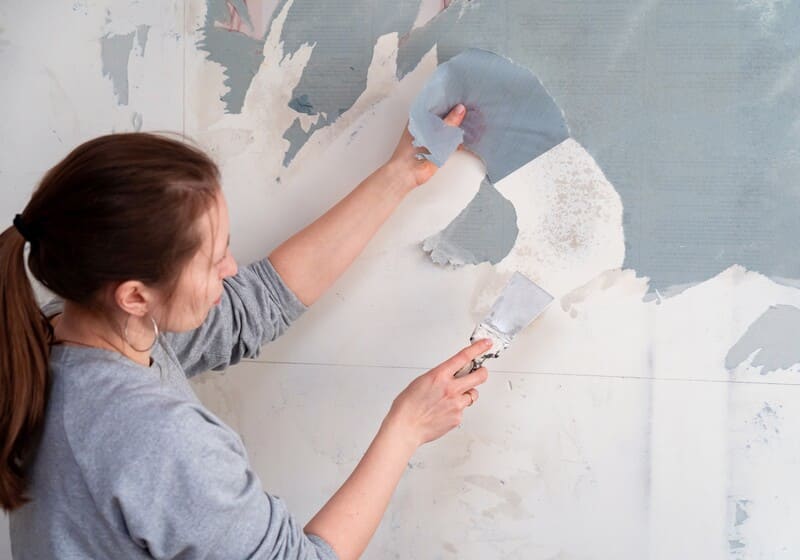
If your home is plastered with outdated wall coverings, you might hesitate to make the upgrades that you want. After all, wallpaper is notoriously difficult to remove (picture hours and hours of steaming, scraping, peeling, grunting, etc.), life’s too short, and you’ve got better things to do. There’s good news though—removing that ugly wallpaper is easier than you think with the right tools, so you can get your project done without breaking a sweat. Here’s what you need to do. First, start with the right tools.Depending on the type of wallpaper you’re dealing with, how long it’s been on the wall and how it was originally applied, the tools you’ll need to remove wallpaper fast and easy will vary. Here’s a breakdown of everything you might need: Follow with the right technique.Before you know which technique will work for your situation, you’ll have to do a little test. If you’re using a steamer, saturate one panel of wallpaper, wait 10 minutes or so and lift an edge with your razor scraper. If it comes up easily, that means the last guy prepped the surface correctly when he applied the wallpaper—lucky you! Continue with soaking the wallpaper and lifting with your

Read More »

Downsizing Tips for Seniors: How To Make The Process Easier

By Patrick Young of the blog AbleUSA.info For many seniors, downsizing makes the most sense after retirement. Living in a smaller home means less to take care of, smaller utility bills and mortgage payments, and the opportunity to stay safe and healthy in order to age in place. It can be physically and emotionally demanding to make a move, however, especially if you have health issues or are making changes after the death of a loved one, so it’s important to look for ways you can make the process as easy as possible. This might mean asking for help in going through your belongings, especially if you’re going to sell or donate any items. Getting organized will help immensely, especially if you have a lot of belongings. Make a plan for each large item by taking photos of your new home so you can get an idea of where they’ll go; this will help you figure out which items will fit and which ones need to be donated, sold, or given to a family member. Keep reading for some great tips on how to make downsizing much easier. Get Organized Getting organized is the key to making the moving process

Read More »

Building Permits: Why You Need One and How to Get It

As a home improvement guru and self-styled master of DIY projects, you might have the idea that building permits are a nuisance. After all, shouldn’t you be able to just build what you want, where you want on your property? While it’s true that building permits can be a pain, they actually serve a very important role that makes the process worthwhile. We’ll explain why building permits are a thing, why you need one and how to get one. Building Permits and Building CodesTo understand why building permits are important, we need to start by talking about building codes. Building codes, simply put, are the standards put in place by local governments to ensure buildings are constructed using the best methods for your area. While some building codes are practically universal, others vary by your local jurisdiction. If you’re building a deck, for example, how deep your footings need to be will be different depending on where you’re building it—in colder environments with a deeper frost line, footings need to be deeper to be considered safe. In other places, such as coastal areas that regularly deal with high winds, your home’s roof and other features may need to be built

Read More »

Your 7-Item Checklist for an Efficient Air Conditioner

If there’s one thing you don’t want going out on you when you’re in the throes of summer, it’s your AC. Whether you use your home’s air conditioning system regularly or not, these maintenance tips will help you keep your system in great working order when the heat wave comes. 1. Start with your thermostat.When was the last time you replaced your thermostat? If you’ve just moved into your new home, what do you know about it? If it’s been awhile, you might be working with an outdated model. In that case, it’s worth looking into springing for a programmable, energy-efficient thermostat. Most can be controlled remotely from your phone for ultimate savings. 2. Look out for wear on exposed ductwork.Worn ductwork is one of the biggest culprits for cooling loss in your home. Look for visible signs of damage and wear. 3. Check the flow of your air vents.You never know what might be blocking airflow, from furniture to curtains to your child’s toys. Walk room to room and be sure that all the air vents are free of obstructions. We promise it’ll make a difference! 4. Make sure your drain line isn’t clogged.Mounted above your furnace, you should

Read More »

Live in Hail Alley? How to Identify Roof Hail Damage and More

Chances are, you already know if you live in Hail Alley. This stretch of the U.S. extends from Texas to the Dakotas, covering wide swaths of Oklahoma, Kansas, Colorado, Wyoming, Missouri and Nebraska. Hail storms in these areas can be strong and sudden, with the height of hail season occurring every year around June. During a hailstorm, hailstones will drop from 30,000 feet and reach speeds of up to 120 miles per hour before they hit the ground, your car, your house or anything else. While most hail is pea- to marble-sized (1⁄4 inch to 1⁄2 inch in diameter) large storms can produce large hail—in fact, the largest hailstone ever recorded in the U.S. fell in Vivian, SD with a diameter of 8 inches! When these storms come through your area, sometimes the damage left behind is very apparent. A lot of the time it’s not, though, and you need a weather eye (sorry, couldn’t help it) to spot potentially serious damage. Here’s a rundown of places around your house to check for hail damage. Signs of Hail Damage on the RoofYour roof will take the brunt of the damage during a hailstorm, and there are some easy ways to

Read More »

How to Put Together Your First Household Tool Kit

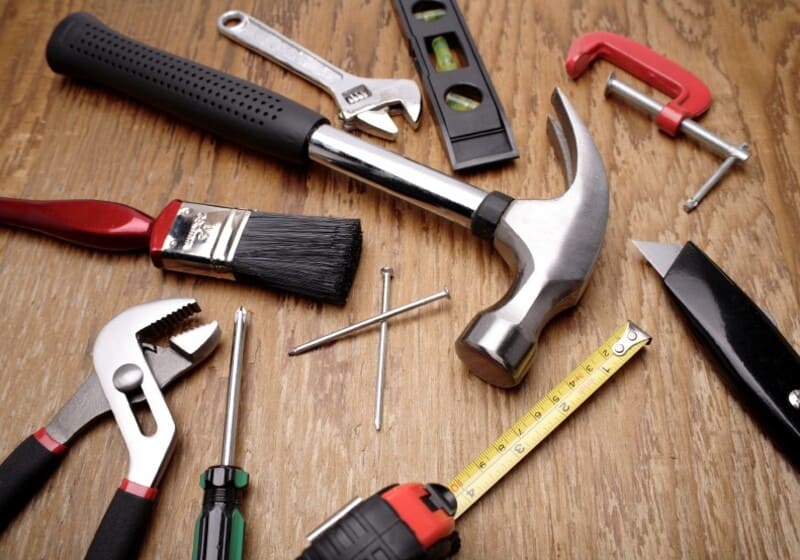
A tool kit is a necessity for any homeowner. Here’s a list of fundamental tools that should be included with any beginner tool kit. HammerYou can never go wrong with the humble hammer. From assembling furniture to hanging pictures, this is a tool you’ll reach for time and time again. Look for a 16 oz. head weight for general DIY projects or a 20 oz. head for demolition work. Utility KnifeOtherwise known as a box cutter, you’ll wonder how you ever got along without one of these. Besides the obvious benefit when it comes to breaking down cardboard boxes, you’ll reach for your utility knife whenever you need to cut sheetrock or drywall, slice fiberglass insulation or scratch out old grout. PliersDifferent types of pliers are perfect for cutting wire or removing nails. You’ll need a small assortment of sizes and types, like needle nose, wire cutting, locking and tongue-and-groove pliers. ScrewdriversWhen it comes to screwdrivers, you’ll need two: a Phillips head and a flat head. While you should be good to go with a medium size in both, it never hurts to go for a set of smaller screwdrivers as well. These can be used for repairing eyeglasses, electronics,

Read More »

After the Home Inspection: When to Request a Repair

When housing markets are hot, buyers have to be flexible when it comes to minor defects in a house they want. Because a home might have multiple competitive offers, it’s important to know how to get yours accepted so you can move into your dream home ASAP. While it would be ideal if the seller offered to fix every issue your home inspector finds, that’s not often realistic. Instead, you need to know which items are potential deal-breakers and which repairs can safely be put off until after closing. We’ll show you when you should request repairs to a home you’re looking at buying, and when asking for a repair could needlessly sink the deal. Don’t Sweat Little IssuesBuying a house is a big investment, so it makes sense that you’d want everything perfect. However, that’s not a reasonable expectation. Unless you’re building your home, every house is a used house, and they’re all going to have idiosyncrasies and blemishes that you’ll have to compromise on. What kinds of things are we talking about? Here’s a handy list: 1. Cosmetic Problems: There might be a crack in a tile, some scratched paint or old carpet you’re not a huge fan

Read More »

Haunted Places: The Vaile Mansion

Location: Independence, MissouriArchitectural Style: Second EmpireBuilt: 1871-1881 The Vaile Mansion has stood for nearly 140 years at 1500 North Liberty Street in Independence, Missouri. Its history has been fraught with scandal, tragedy and more than a few reported hauntings. This makes the beautiful yet foreboding Vaile Mansion perfect for our Haunted Places series! Read on as we uncover the fascinating history of this haunted home-turned-sanitarium. Meet the VailesColonel Harvey Merrick Vaile was born in 1831 in Bennington, Vermont. After building his fortune carefully for years as a lawyer, journalist and business investor, he became part owner of Star Mail Routes, a U.S. postal contractor that would run mail from St. Louis to points west in the frontier. As budding socialites in Independence, Missouri, he and his wife, Cecilia Sophia Vaile, set out to build a home reflective of their wealth and status in the community. The Vaile MansionThe Vailes’ new home was designed by renowned Kansas City architect Asa Beebe Cross in the Second Empire style, borrowing popular stylistic embellishments from French Baroque Revival architecture. Breaking ground in 1871, the Vaile Mansion was constructed over the course of 10 years and cost an astounding $150,000 ($4,000,000 in today’s dollars). The
Read More »

Home Accessibility: Finding the Right Home and Making It Perfect for Your Needs

By Patrick Young of the blog AbleUSA.info Living with a disability or mobility issue is never easy, but you can make it much more manageable by prioritizing home accessibility. If your home isn’t tailored to suit your specific needs, you’re making things much harder on yourself. Any focus on home accessibility will consist of both finding a home that, structurally, suits your needs as well as taking steps to modify that home even further. Here are some things to consider. Finding the Right Home for YouLet’s get this out of the way — you’re never going to find a home that perfectly suits your needs. You can, however, get pretty close. As long as you find a home that doesn’t complicate your mobility issues/disabilities, then you should be able to modify it to near perfection. Here are a few things that you may want to look for in any potential home: Some things, like the home’s floor plan, are hard to alter. If you use a wheelchair, you may want to avoid multi-floor homes, for example. If you can find a home that checks off 75 percent or so of your accessibility requirements, then you’re off to a good start.

Read More »

How to Tell If You Have Hard Water

Hard water. Soft water. If you’re not sure what the difference is, or what that difference means for your home, you’ve come to the right place. We’ll explain everything you need to know about hard water and how to tell if it’s an issue in your home. Is Hard Water Safe?We’re getting this out of the way first thing. Yes, hard water is completely safe to drink, cook with, wash clothes in, and anything else you’d use water for in your home. Hard water is simply tap water that has a higher than ideal content of minerals, namely calcium and magnesium. While hard water isn’t dangerous in any way, it can be a hassle to deal with. As we’ll see, if your home has hard water, you’ll see the effects every time you cook, clean or bathe. Sure Signs of Hard WaterIt can be hard to tell whether your water is hard—since you can’t determine the mineral content of your water by sight, you have to rely on the signs hard water leaves behind. Here are some of the ways to tell: What to Do About Hard WaterThe simple answer is investing in a water-softening system. Water softeners treat your

Read More »

Removing Wallpaper Made Easy

If your home is plastered with outdated wall coverings, you might hesitate to make the upgrades that you want. After all, wallpaper is notoriously difficult to remove (picture hours and hours of steaming, scraping, peeling, grunting, etc.), life’s too short, and you’ve got better things to do. There’s good news though—removing that ugly wallpaper is easier than you think with the right tools, so you can get your project done without breaking a sweat. Here’s what you need to do. First, start with the right tools.Depending on the type of wallpaper you’re dealing with, how long it’s been on the wall and how it was originally applied, the tools you’ll need to remove wallpaper fast and easy will vary. Here’s a breakdown of everything you might need: Follow with the right technique.Before you know which technique will work for your situation, you’ll have to do a little test. If you’re using a steamer, saturate one panel of wallpaper, wait 10 minutes or so and lift an edge with your razor scraper. If it comes up easily, that means the last guy prepped the surface correctly when he applied the wallpaper—lucky you! Continue with soaking the wallpaper and lifting with your

Read More »

Downsizing Tips for Seniors: How To Make The Process Easier

By Patrick Young of the blog AbleUSA.info For many seniors, downsizing makes the most sense after retirement. Living in a smaller home means less to take care of, smaller utility bills and mortgage payments, and the opportunity to stay safe and healthy in order to age in place. It can be physically and emotionally demanding to make a move, however, especially if you have health issues or are making changes after the death of a loved one, so it’s important to look for ways you can make the process as easy as possible. This might mean asking for help in going through your belongings, especially if you’re going to sell or donate any items. Getting organized will help immensely, especially if you have a lot of belongings. Make a plan for each large item by taking photos of your new home so you can get an idea of where they’ll go; this will help you figure out which items will fit and which ones need to be donated, sold, or given to a family member. Keep reading for some great tips on how to make downsizing much easier. Get Organized Getting organized is the key to making the moving process

Read More »

Building Permits: Why You Need One and How to Get It

As a home improvement guru and self-styled master of DIY projects, you might have the idea that building permits are a nuisance. After all, shouldn’t you be able to just build what you want, where you want on your property? While it’s true that building permits can be a pain, they actually serve a very important role that makes the process worthwhile. We’ll explain why building permits are a thing, why you need one and how to get one. Building Permits and Building CodesTo understand why building permits are important, we need to start by talking about building codes. Building codes, simply put, are the standards put in place by local governments to ensure buildings are constructed using the best methods for your area. While some building codes are practically universal, others vary by your local jurisdiction. If you’re building a deck, for example, how deep your footings need to be will be different depending on where you’re building it—in colder environments with a deeper frost line, footings need to be deeper to be considered safe. In other places, such as coastal areas that regularly deal with high winds, your home’s roof and other features may need to be built

Read More »

Your 7-Item Checklist for an Efficient Air Conditioner

If there’s one thing you don’t want going out on you when you’re in the throes of summer, it’s your AC. Whether you use your home’s air conditioning system regularly or not, these maintenance tips will help you keep your system in great working order when the heat wave comes. 1. Start with your thermostat.When was the last time you replaced your thermostat? If you’ve just moved into your new home, what do you know about it? If it’s been awhile, you might be working with an outdated model. In that case, it’s worth looking into springing for a programmable, energy-efficient thermostat. Most can be controlled remotely from your phone for ultimate savings. 2. Look out for wear on exposed ductwork.Worn ductwork is one of the biggest culprits for cooling loss in your home. Look for visible signs of damage and wear. 3. Check the flow of your air vents.You never know what might be blocking airflow, from furniture to curtains to your child’s toys. Walk room to room and be sure that all the air vents are free of obstructions. We promise it’ll make a difference! 4. Make sure your drain line isn’t clogged.Mounted above your furnace, you should

Read More »

Live in Hail Alley? How to Identify Roof Hail Damage and More

Chances are, you already know if you live in Hail Alley. This stretch of the U.S. extends from Texas to the Dakotas, covering wide swaths of Oklahoma, Kansas, Colorado, Wyoming, Missouri and Nebraska. Hail storms in these areas can be strong and sudden, with the height of hail season occurring every year around June. During a hailstorm, hailstones will drop from 30,000 feet and reach speeds of up to 120 miles per hour before they hit the ground, your car, your house or anything else. While most hail is pea- to marble-sized (1⁄4 inch to 1⁄2 inch in diameter) large storms can produce large hail—in fact, the largest hailstone ever recorded in the U.S. fell in Vivian, SD with a diameter of 8 inches! When these storms come through your area, sometimes the damage left behind is very apparent. A lot of the time it’s not, though, and you need a weather eye (sorry, couldn’t help it) to spot potentially serious damage. Here’s a rundown of places around your house to check for hail damage. Signs of Hail Damage on the RoofYour roof will take the brunt of the damage during a hailstorm, and there are some easy ways to

Read More »

How to Put Together Your First Household Tool Kit

A tool kit is a necessity for any homeowner. Here’s a list of fundamental tools that should be included with any beginner tool kit. HammerYou can never go wrong with the humble hammer. From assembling furniture to hanging pictures, this is a tool you’ll reach for time and time again. Look for a 16 oz. head weight for general DIY projects or a 20 oz. head for demolition work. Utility KnifeOtherwise known as a box cutter, you’ll wonder how you ever got along without one of these. Besides the obvious benefit when it comes to breaking down cardboard boxes, you’ll reach for your utility knife whenever you need to cut sheetrock or drywall, slice fiberglass insulation or scratch out old grout. PliersDifferent types of pliers are perfect for cutting wire or removing nails. You’ll need a small assortment of sizes and types, like needle nose, wire cutting, locking and tongue-and-groove pliers. ScrewdriversWhen it comes to screwdrivers, you’ll need two: a Phillips head and a flat head. While you should be good to go with a medium size in both, it never hurts to go for a set of smaller screwdrivers as well. These can be used for repairing eyeglasses, electronics,

Read More »

After the Home Inspection: When to Request a Repair

When housing markets are hot, buyers have to be flexible when it comes to minor defects in a house they want. Because a home might have multiple competitive offers, it’s important to know how to get yours accepted so you can move into your dream home ASAP. While it would be ideal if the seller offered to fix every issue your home inspector finds, that’s not often realistic. Instead, you need to know which items are potential deal-breakers and which repairs can safely be put off until after closing. We’ll show you when you should request repairs to a home you’re looking at buying, and when asking for a repair could needlessly sink the deal. Don’t Sweat Little IssuesBuying a house is a big investment, so it makes sense that you’d want everything perfect. However, that’s not a reasonable expectation. Unless you’re building your home, every house is a used house, and they’re all going to have idiosyncrasies and blemishes that you’ll have to compromise on. What kinds of things are we talking about? Here’s a handy list: 1. Cosmetic Problems: There might be a crack in a tile, some scratched paint or old carpet you’re not a huge fan

Read More »