Posts

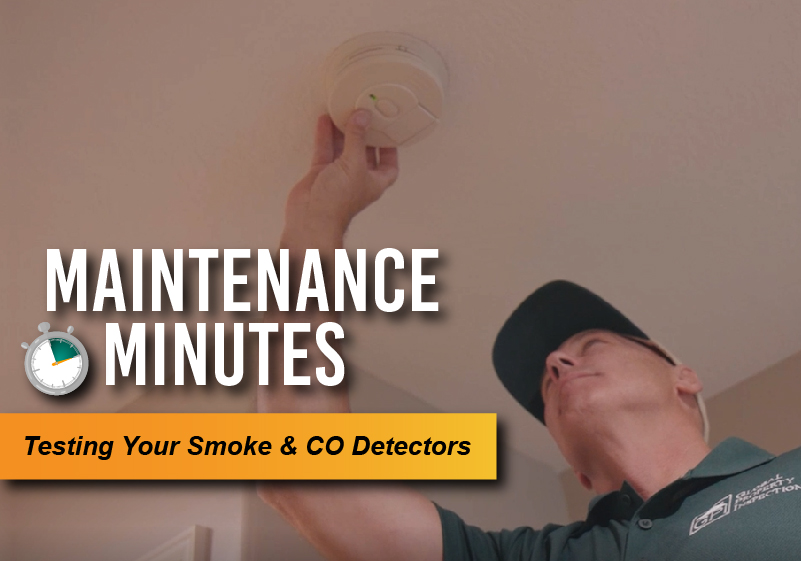
Maintenance Minutes: How to Test Your Smoke and Carbon Monoxide Detectors

Did you know you can cut risks related to carbon monoxide poisoning and fire hazards in half by following just a few helpful tips? The best part is that these recommendations can be completed on your own without the need to pay for additional services from a contractor. All you need is a foot stool or ladder and possibly a few batteries. Before we dive into carbon monoxide and fire prevention, let’s examine reasons why prevention is so important. The Importance of CO SafetyCarbon monoxide is particularly dangerous because it’s an” invisible gas,” meaning that it’s odorless, colorless, and is unseen to the naked eye. It prevents the oxygen in your body from circulating throughout your system properly, disrupting your respiratory system. Carbon monoxide is the byproduct of the fumes produced by fuel sources such as gasoline, coal, kerosene, and wood. The most common sources of carbon monoxide poisoning in homes come from unventilated space heaters, improperly connected water heaters, unclean fireplaces, vehicles that have been unintentionally left running in garages, and household appliances that are incorrectly connected. The onset of carbon monoxide poisoning happens very quickly. According to John Hopkins Medicine, carbon monoxide poisoning can occur in as little

Read More »

Getting Rid of Your Bad-Tasting Tap Water for Good

If you think you have bad-tasting or smelling water in your home, it may not be in your head. In some areas of the United States, tap water includes additives that you may have certain sensitivities or allergies to. While a few of these added chemicals serve a purpose, such as the addition of fluoride to help protect the enamel on your teeth, there is also unwanted waste that can sometimes end up in the water supply. Blended PipingAnother reason your current water system may be producing a bad taste or foul odor is the piping. For many newer homes, it can be an issue, as the piping leading to the tap is not a pure metal as was once used in older homes built prior to 1950. Today, it is standard practice to use piping that is a blend of metals and plastic such as polybutylene or polyethylene. This type of piping has the potential to cause an assortment of issues. These plastics can lead to problems, specifically for those with latex allergies. An additional issue with the usage of blended pipes is the addition of mold buildup. If mold builds up in the pipes it can not only

Read More »

How to Storm-Proof Your Home from Inclement Weather

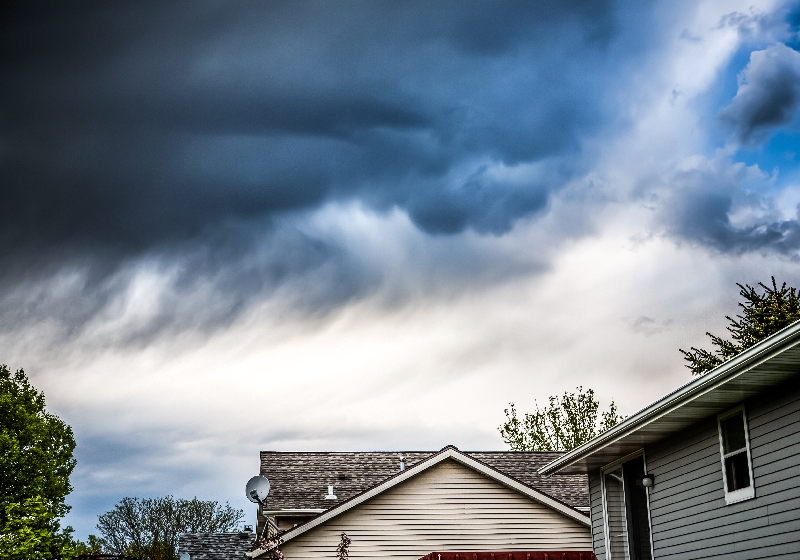
A bad storm can bring about so many repairs. From broken windows to downed powerlines and trees. All together, these things can quickly add up to be very costly. The best method of defense is to prepare for disaster before it occurs. Prior to storm-proofing your home, you’ll want to consider the types of inclement weather common to the area where you reside (i.e., blizzards in the Midwest versus hurricanes and floods in southern states). Based on that information, it’s easier to prepare for and prevent future issues that are most likely to occur. Warm Weather Problems In warmer climates, it’s more common to have issues resulting from high-wind storms and possible flooding (depending on how far south you live). To help weatherproof your home in these situations, it’s best to start by ensuring the solidity of your roof. Loose shingles are a frequent issue in areas where high windstorms are common. Making sure that you have a roof with a solid foundation is key. This can be accomplished in one of two ways. The best practice is to use a double layer of shingles that are no more than six inches apart, as this will prevent holes from forming

Read More »

How to Properly Tend to Trees

Trees are a great addition to any yard. They provide shade, a home for local wildlife, and even delicious fruits. But you do need to give your trees the right care to avoid them becoming a giant pain. Here’s what you can do to keep those saplings strong and healthy. Know your tree species better. There are close to 1,000 species of trees throughout North America, each one requiring different care instructions. If you haven’t had to care for trees before, it may seem a bit overwhelming. The good news is that a little bit of research can give you a better idea of how to care for the ones at your home. The internet, books, and even local lawn care professionals are great resources to reach out to. You’ll be able to find the best information on what to do and what not to do to keep your trees growing strong. Care for the ground around. Poor soil conditions can impact a tree’s root system and its ability to get the nutrients it needs. Avoid compacting the dirt at the base of the tree too much. This is common when people frequently park their cars underneath. Move your car

Read More »

The Best Advice For Buying A Fixer-Upper Home

By Patrick Young of the blog, AbleUSA.info Buying a home is a big, exciting milestone. However, it can be a pricey undertaking. That’s why many first-time homebuyers consider an “as-is” fixer-upper home to renovate and repair themselves. If you’re thinking about following this path, National Property Inspections invites you to consider the following before you sign your name on the dotted line. PrepareFixer-uppers can quickly become money pits no matter how inexpensive they appear to be at first. If you plan to pay for renovations out-of-pocket, you still need a mortgage to purchase the house. For any mortgage loan, fixer-upper or otherwise, a lender will examine your credit. If you have had any hiccups in the past, you should clear them up ahead of time. Then you will need a down payment for your home, cash for renovations, and if you need to live elsewhere while making repairs, budget for that as well. If you need to roll your renovations into the mortgage, there are loans especially designed for this purpose, but detailed cost estimates must be included. These estimates should consider all foreseeable expenses, including fees, inspections, and permits. Know Your Zone If you’re not sure where to start

Read More »

Real Estate Investing Trends for 2022

The past two years have been anything but “normal” for real estate investors, and many have learned to adapt or fear missing out. Several factors converged to create the “perfect storm” for a competitive real estate market leading into 2022. Low interest rates made homeownership more attractive to more buyers, and the low inventory helped elevate prices. The pandemic continued to impact markets in several ways, including an increase in working from home, an eviction moratorium, and a supply shortage. So, what will 2022 look like for real estate investors? It’s impossible to predict with pinpoint accuracy, but these top real estate investors and educators identify which trends they believe will emerge in 2022, and how to better position yourself for success. Predictions for Real Estate Investing in 2022Inching toward “normal”The economy and housing market are showing signs of returning to pre-pandemic levels, according to Lee Arnold, an international speaker, trainer, author and licensed broker, and CEO of Secured Investment Corp. “Many real estate investors and construction companies are breathing a sigh of relief and hoping that the period of multiple offers, contingency waivers, and record-high prices are finally in their rearview mirror,” he said. “The entire industry is looking

Read More »

Carson Dunlop Acquires National Property Inspections, Inc.

National Property Inspections, Inc. is pleased to announce that Carson Dunlop has recently acquired our organization. In this exciting development, Carson Dunlop and NPI are slated to become the preeminent provider of inspection and inspection-related services in North America. “I have long admired the strength of the Carson Dunlop brand and am thrilled to join forces to further accelerate growth at NPI,” said Roland Bates, founder of NPI. “I am extremely proud of the business we’ve built over the last 35 years and am enthusiastic about the future. Becoming part of Carson Dunlop will be an exciting new chapter for us and I look forward to continuing to support the NPI franchise system in my new role.” I have long admired the strength of the Carson Dunlop brand and am thrilled to join forces to further accelerate growth at NPI. I am extremely proud of the business we’ve built over the last 35 years and am enthusiastic about the future. Becoming part of Carson Dunlop will be an exciting new chapter for us and I look forward to continuing to support the NPI franchise system in my new role. Roland BatesFounder of National Property Inspections, Inc. Carson Dunlop has been

Read More »

Your Spring Starting Guide to Vegetable Gardens

Spring is back again! With the excitement of the new season comes inspiration for projects around your home. If you’re looking for a way to get out and enjoy the beautiful weather, then a vegetable garden is just what you need. Choosing Where to Plant Deciding on a spot to start your vegetable garden is the first step. If you’ve never done a garden before, you may be unsure about where to start. Before you break ground, study your yard. Watch the way the sun and shadows move around, how water flows, and what type of soil your yard mainly consists of. Once you’ve picked a spot that provides the perfect balance, measure out your plot. For beginners, it’s best to start small so you don’t overwhelm yourself. Picking Your Vegetables Now comes the time to decide what to plant. Some of the easiest plants are carrots, zucchinis, tomatoes, green beans, and beets. To avoid wasting plants and money, choose vegetables you typically eat in the correct amount for your family (this quick guide can help you calculate how many of each to plant). Bonus tip: You’ll save money by choosing plants that your local grocer doesn’t always stock. If

Read More »

10 Items to Add to Your Home Toolbox

If you’ve been a homeowner for some time, chances are you already have a well-put-together toolkit. In fact, you may have already used it a few times on your own renovations and repairs. If you’re wanting to expand your tool stockpile, here are 10 items that will make any future projects a breeze. Headlamp or Magnetic Tool Light Trying to juggle a flashlight and your tools is a hassle and can even be dangerous. With a headlamp, you don’t have to worry about fumbling for the right tool while you’re working. You just slide it on and voila! You’re free to move about and illuminate your workspace. You can also get a magnetic tool light. These tend to be a bit brighter than a headlamp, so they’re really useful in the darkest parts of your home. Telescoping Mirror Can’t quite see around or underneath what you’re fixing? A telescoping mirror will give you the angle you need. You’ll be able to see if there are any nails or wires before sticking your hand in. Mirrors like this are usually cheap, so they’re definitely a great investment. OrganizersAs you add to your toolkit, things may become a bit cluttered. Searching for

Read More »

How to DIY a Built-In Bookshelf

Have you been wondering about what to do with that stack of novels? A built-in bookshelf may just be your solution! It can provide you with a place to store your books out of the way and make them easier to grab. You’ll also have a great conversation piece for your next get together. Tools You’ll Need You may find yourself needing some additional materials if you want a more elaborate shelving style, but in general, here’s what you’ll need: If you buy your boards pre-cut, you may not need the saws, and of course you can always use a hammer in lieu of a nail gun. Measure Your Project Measuring is always the most important first step before you start sawing and nailing away at your project. With either some tape or a carpenter’s pencil, mark an outline of the area you’ll be building in. Measure away from any moulding so you don’t miscalculate and end up having to start all over. You’ll have to remove moulding or baseboards that are in the way, so keep that in mind when choosing a location for your bookshelf. Mark Out Your Supports To make your bookshelf a “built-in” you need to

Read More »

Maintenance Minutes: How to Test Your Smoke and Carbon Monoxide Detectors

Did you know you can cut risks related to carbon monoxide poisoning and fire hazards in half by following just a few helpful tips? The best part is that these recommendations can be completed on your own without the need to pay for additional services from a contractor. All you need is a foot stool or ladder and possibly a few batteries. Before we dive into carbon monoxide and fire prevention, let’s examine reasons why prevention is so important. The Importance of CO SafetyCarbon monoxide is particularly dangerous because it’s an” invisible gas,” meaning that it’s odorless, colorless, and is unseen to the naked eye. It prevents the oxygen in your body from circulating throughout your system properly, disrupting your respiratory system. Carbon monoxide is the byproduct of the fumes produced by fuel sources such as gasoline, coal, kerosene, and wood. The most common sources of carbon monoxide poisoning in homes come from unventilated space heaters, improperly connected water heaters, unclean fireplaces, vehicles that have been unintentionally left running in garages, and household appliances that are incorrectly connected. The onset of carbon monoxide poisoning happens very quickly. According to John Hopkins Medicine, carbon monoxide poisoning can occur in as little

Read More »

Getting Rid of Your Bad-Tasting Tap Water for Good

If you think you have bad-tasting or smelling water in your home, it may not be in your head. In some areas of the United States, tap water includes additives that you may have certain sensitivities or allergies to. While a few of these added chemicals serve a purpose, such as the addition of fluoride to help protect the enamel on your teeth, there is also unwanted waste that can sometimes end up in the water supply. Blended PipingAnother reason your current water system may be producing a bad taste or foul odor is the piping. For many newer homes, it can be an issue, as the piping leading to the tap is not a pure metal as was once used in older homes built prior to 1950. Today, it is standard practice to use piping that is a blend of metals and plastic such as polybutylene or polyethylene. This type of piping has the potential to cause an assortment of issues. These plastics can lead to problems, specifically for those with latex allergies. An additional issue with the usage of blended pipes is the addition of mold buildup. If mold builds up in the pipes it can not only

Read More »

How to Storm-Proof Your Home from Inclement Weather

A bad storm can bring about so many repairs. From broken windows to downed powerlines and trees. All together, these things can quickly add up to be very costly. The best method of defense is to prepare for disaster before it occurs. Prior to storm-proofing your home, you’ll want to consider the types of inclement weather common to the area where you reside (i.e., blizzards in the Midwest versus hurricanes and floods in southern states). Based on that information, it’s easier to prepare for and prevent future issues that are most likely to occur. Warm Weather Problems In warmer climates, it’s more common to have issues resulting from high-wind storms and possible flooding (depending on how far south you live). To help weatherproof your home in these situations, it’s best to start by ensuring the solidity of your roof. Loose shingles are a frequent issue in areas where high windstorms are common. Making sure that you have a roof with a solid foundation is key. This can be accomplished in one of two ways. The best practice is to use a double layer of shingles that are no more than six inches apart, as this will prevent holes from forming

Read More »

How to Properly Tend to Trees

Trees are a great addition to any yard. They provide shade, a home for local wildlife, and even delicious fruits. But you do need to give your trees the right care to avoid them becoming a giant pain. Here’s what you can do to keep those saplings strong and healthy. Know your tree species better. There are close to 1,000 species of trees throughout North America, each one requiring different care instructions. If you haven’t had to care for trees before, it may seem a bit overwhelming. The good news is that a little bit of research can give you a better idea of how to care for the ones at your home. The internet, books, and even local lawn care professionals are great resources to reach out to. You’ll be able to find the best information on what to do and what not to do to keep your trees growing strong. Care for the ground around. Poor soil conditions can impact a tree’s root system and its ability to get the nutrients it needs. Avoid compacting the dirt at the base of the tree too much. This is common when people frequently park their cars underneath. Move your car

Read More »

The Best Advice For Buying A Fixer-Upper Home

By Patrick Young of the blog, AbleUSA.info Buying a home is a big, exciting milestone. However, it can be a pricey undertaking. That’s why many first-time homebuyers consider an “as-is” fixer-upper home to renovate and repair themselves. If you’re thinking about following this path, National Property Inspections invites you to consider the following before you sign your name on the dotted line. PrepareFixer-uppers can quickly become money pits no matter how inexpensive they appear to be at first. If you plan to pay for renovations out-of-pocket, you still need a mortgage to purchase the house. For any mortgage loan, fixer-upper or otherwise, a lender will examine your credit. If you have had any hiccups in the past, you should clear them up ahead of time. Then you will need a down payment for your home, cash for renovations, and if you need to live elsewhere while making repairs, budget for that as well. If you need to roll your renovations into the mortgage, there are loans especially designed for this purpose, but detailed cost estimates must be included. These estimates should consider all foreseeable expenses, including fees, inspections, and permits. Know Your Zone If you’re not sure where to start

Read More »

Real Estate Investing Trends for 2022

The past two years have been anything but “normal” for real estate investors, and many have learned to adapt or fear missing out. Several factors converged to create the “perfect storm” for a competitive real estate market leading into 2022. Low interest rates made homeownership more attractive to more buyers, and the low inventory helped elevate prices. The pandemic continued to impact markets in several ways, including an increase in working from home, an eviction moratorium, and a supply shortage. So, what will 2022 look like for real estate investors? It’s impossible to predict with pinpoint accuracy, but these top real estate investors and educators identify which trends they believe will emerge in 2022, and how to better position yourself for success. Predictions for Real Estate Investing in 2022Inching toward “normal”The economy and housing market are showing signs of returning to pre-pandemic levels, according to Lee Arnold, an international speaker, trainer, author and licensed broker, and CEO of Secured Investment Corp. “Many real estate investors and construction companies are breathing a sigh of relief and hoping that the period of multiple offers, contingency waivers, and record-high prices are finally in their rearview mirror,” he said. “The entire industry is looking

Read More »

Carson Dunlop Acquires National Property Inspections, Inc.

National Property Inspections, Inc. is pleased to announce that Carson Dunlop has recently acquired our organization. In this exciting development, Carson Dunlop and NPI are slated to become the preeminent provider of inspection and inspection-related services in North America. “I have long admired the strength of the Carson Dunlop brand and am thrilled to join forces to further accelerate growth at NPI,” said Roland Bates, founder of NPI. “I am extremely proud of the business we’ve built over the last 35 years and am enthusiastic about the future. Becoming part of Carson Dunlop will be an exciting new chapter for us and I look forward to continuing to support the NPI franchise system in my new role.” I have long admired the strength of the Carson Dunlop brand and am thrilled to join forces to further accelerate growth at NPI. I am extremely proud of the business we’ve built over the last 35 years and am enthusiastic about the future. Becoming part of Carson Dunlop will be an exciting new chapter for us and I look forward to continuing to support the NPI franchise system in my new role. Roland BatesFounder of National Property Inspections, Inc. Carson Dunlop has been

Read More »

Your Spring Starting Guide to Vegetable Gardens

Spring is back again! With the excitement of the new season comes inspiration for projects around your home. If you’re looking for a way to get out and enjoy the beautiful weather, then a vegetable garden is just what you need. Choosing Where to Plant Deciding on a spot to start your vegetable garden is the first step. If you’ve never done a garden before, you may be unsure about where to start. Before you break ground, study your yard. Watch the way the sun and shadows move around, how water flows, and what type of soil your yard mainly consists of. Once you’ve picked a spot that provides the perfect balance, measure out your plot. For beginners, it’s best to start small so you don’t overwhelm yourself. Picking Your Vegetables Now comes the time to decide what to plant. Some of the easiest plants are carrots, zucchinis, tomatoes, green beans, and beets. To avoid wasting plants and money, choose vegetables you typically eat in the correct amount for your family (this quick guide can help you calculate how many of each to plant). Bonus tip: You’ll save money by choosing plants that your local grocer doesn’t always stock. If

Read More »

10 Items to Add to Your Home Toolbox

If you’ve been a homeowner for some time, chances are you already have a well-put-together toolkit. In fact, you may have already used it a few times on your own renovations and repairs. If you’re wanting to expand your tool stockpile, here are 10 items that will make any future projects a breeze. Headlamp or Magnetic Tool Light Trying to juggle a flashlight and your tools is a hassle and can even be dangerous. With a headlamp, you don’t have to worry about fumbling for the right tool while you’re working. You just slide it on and voila! You’re free to move about and illuminate your workspace. You can also get a magnetic tool light. These tend to be a bit brighter than a headlamp, so they’re really useful in the darkest parts of your home. Telescoping Mirror Can’t quite see around or underneath what you’re fixing? A telescoping mirror will give you the angle you need. You’ll be able to see if there are any nails or wires before sticking your hand in. Mirrors like this are usually cheap, so they’re definitely a great investment. OrganizersAs you add to your toolkit, things may become a bit cluttered. Searching for

Read More »

How to DIY a Built-In Bookshelf

Have you been wondering about what to do with that stack of novels? A built-in bookshelf may just be your solution! It can provide you with a place to store your books out of the way and make them easier to grab. You’ll also have a great conversation piece for your next get together. Tools You’ll Need You may find yourself needing some additional materials if you want a more elaborate shelving style, but in general, here’s what you’ll need: If you buy your boards pre-cut, you may not need the saws, and of course you can always use a hammer in lieu of a nail gun. Measure Your Project Measuring is always the most important first step before you start sawing and nailing away at your project. With either some tape or a carpenter’s pencil, mark an outline of the area you’ll be building in. Measure away from any moulding so you don’t miscalculate and end up having to start all over. You’ll have to remove moulding or baseboards that are in the way, so keep that in mind when choosing a location for your bookshelf. Mark Out Your Supports To make your bookshelf a “built-in” you need to

Read More »