
Homes can hide both visible and invisible hazards. As home inspectors, our job is to identify these dangers and help our clients understand whether they’re present–or could become a problem if repairs aren’t made.
Most people have heard of common home health hazards like asbestos, radon, and lead, but many don’t realize why these materials became such major concerns, or how their use has changed over time.
Even though lead-based paints have been banned since 1978, many older homes still pose a real risk to families today. Let’s take a closer look at the history of lead, why it’s so dangerous, and what homeowners need to know to keep their families safe.
A Brief History of Lead Use
Lead has played a major role in human life for thousands of years. In ancient times, it was used in surprising ways–as a key ingredient in makeup and mascara, a preservative for wine, and even a seasoning for food in ancient Rome.
Since it was abundant and easy to shape, the Roman Empire relied on lead to build their extensive plumbing systems, carrying water throughout their cities.
Fun fact: The latin word for lead, plumbum, is where we get the words plumber and plumbing still used today!
Fast-forward to the modern era, and lead has found many new purposes. It was added to gasoline to improve engine performance and used in household paints for its quick-drying, durable, and moisture-resistant qualities. It may sound strange to us today, but lead was nearly everywhere in daily life at one point. This would not last.
The Dangerous Effects of Lead
The truth is that we’ve known that lead is poisonous for thousands of years. While it was used sparingly before the Roman era, its popularity skyrocketed once it became essential to Roman plumbing and daily life.
Even then, early thinkers warned of its dangers. Pliny and Vitruvius wrote about the toxic fumes produced by smelting lead (see H. A. Waldron’s Lead poisoning in the ancient world), and many credit Hippocrates as the first to document its harmful effects on the human body.
Despite this reputation, lead continued to be widely used for centuries, its low cost and versatility outweighing health concerns–at least in the public eye. By the mid-1900s, American dependence on lead grew to the highest levels in history. According to the Environmental Protection Agency, the average citizen was exposed to over 5,000 grams per year, compared to only about 550 grams for a Roman citizen.
Meaningful change didn’t come until pediatric researcher Herbert Needleman published his groundbreaking studies linking even low-level lead exposure to developmental issues in children (see more from Dr. Howard Markel at PBS). While high lead levels were already known to cause seizures and even death, Needleman showed that trace amounts could reduce IQ scores and contribute to behavioral problems.
Today, the health risks of lead are taken extremely seriously. It has been phased out of nearly all consumer industries: lead-based paint was banned in 1978, lead piping for public water in 1986, and leaded gasoline in 1996.
What Homeowners Need to Know About Lead Paint
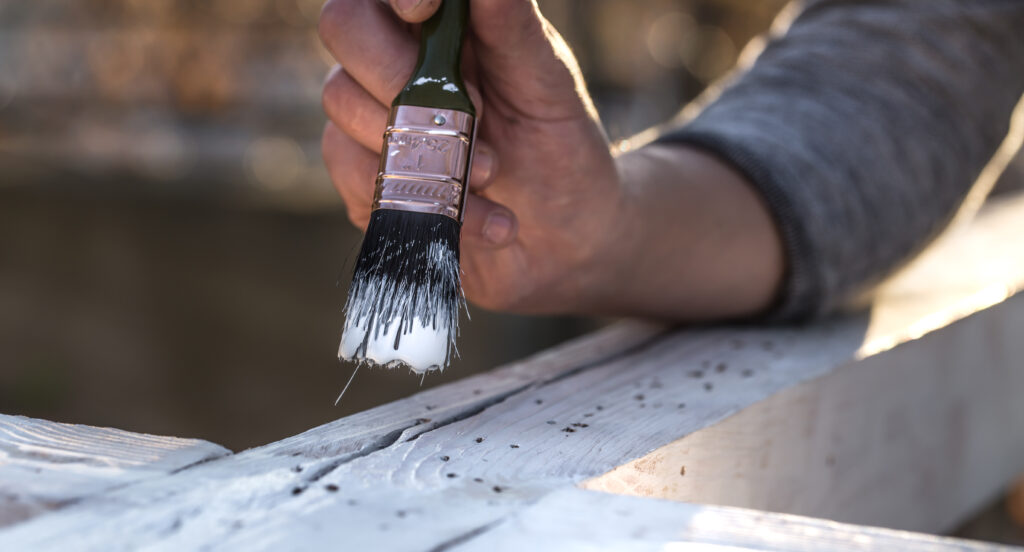
When lead-based paint was still common in homes, it would peel and flake off of high-traffic areas like window sills, door frames, and stairwells. These chips and dust particles could easily find their way into living spaces – and young children who chewed on or ingested them faced serious health risks.
While new homes no longer use lead-based paints, many older homes may still contain it, possibly beneath newer layers. Peeling or deteriorating paint can still pose dangers for families, especially those with small children. And during renovations, sanding or scraping old surfaces can release fine lead dust into the air – a hazard that’s often overlooked.
The EPA recommends hiring contractors who are certified Lead-Safe Renovators to ensure that dust and debris are properly contained during any remodeling project.
Modern building standards protect us from more hazards than ever before, but many homes may still fall short of today’s safety requirements. To keep your home safe, schedule a buyer’s inspection with a trusted NPI inspector near you. Our inspectors are trained to identify outdated or unsafe materials, including lead-based paint, asbestos, and other common household hazards.
Want more tips on home maintenance, design, or DIY safety? Stick with us right here on the NPI blog.