
Category: Home Inspection

Tiny Homes: A Forgotten Fad Or A Major Movement?

Where most look to trade up, tiny home-owners downsize and purge in order to follow this minimalist trend. For those wondering what the draw is and whether the movement has already passed by, here is a bit more information about the absolutely endearing tiny home.

Read More »

How To Improve Your Home’s Ventilation (And Why It’s Important)

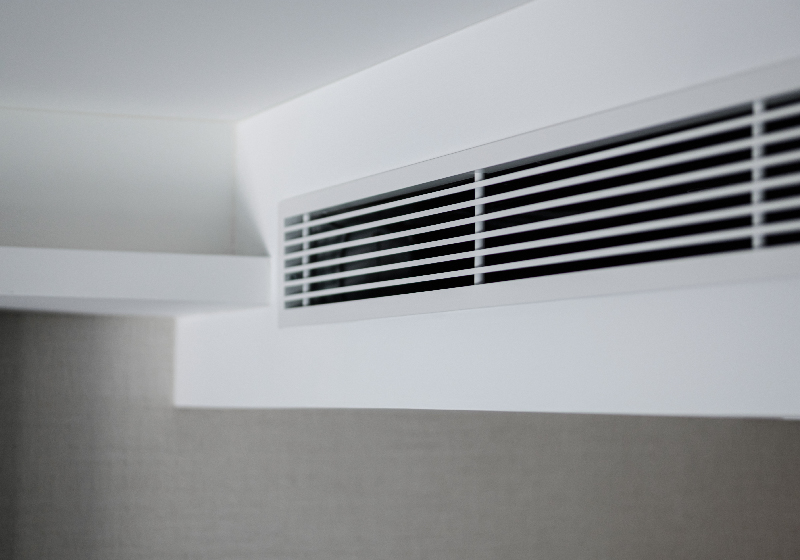
Staying on top of a home’s upkeep can often feel like a full-time job. With every project checked off the list, oftentimes homeowners end up adding two more in a never-ending quest for home improvement. While some home maintenance and home upgrade projects can seem to add a lot to a homeowner’s plate, improving a home’s ventilation systems tends to eliminate many pesky household issues. What is Home Ventilation?Ventilation refers to the systems a home uses to cycle out pollutants and carry in fresh air, while also regulating a comfortable indoor environment. Older homes were able to get by with natural ventilation through windows, doors, and natural air leaks in walls and ceilings, but current systems are more sophisticated. The modern home has become much more air-tight than in the past in an attempt to improve energy efficiency. The side effects of these building philosophies have led to many new maintenance issues and even health problems for families. Homeowners who are unaware of the state of their house’s ventilation systems will benefit from a regular home systems inspection. Why is Ventilation Important?Poor ventilation leads to problems throughout the home. A home has two key contributors to pollutants and condensation: the

Read More »

What To Consider Before Getting A Pool

New homebuyers have so much to consider as they search for their dream home. Outside of architectural style, location, number of bedrooms, or whether it has a multi-car garage, homeowners need to be able to picture life within the house. Can they picture their kids playing in the backyard? Is this the type of place where they can see their family and friends wanting to come and visit? One amenity that has the ability to generate a great deal of excitement and ensure that a new home will be a gathering point for friends and family is the swimming pool. However, there are a lot of added responsibilities that come with managing and maintaining a pool. Whether you’re a homebuyer looking at a property with a pool, or you’re a homeowner who is thinking of making a dynamic addition to their home, here are a few things to consider before getting a pool. The Effects on Your ROIWhen making any major alteration to a property, homeowners should consider what impact that change will have on their property value. Even if the expectation is to stay in the same home for a long time, plans can change quickly! Although conventional wisdom

Read More »

Property Inspections Are Reaching New Heights With Drones

When students try to predict their future careers, they face a tall task. More likely than not, their future career probably doesn’t even exist yet! Technology is advancing at a breakneck pace, and as a result, workers are finding themselves in exciting new fields and industry standards are transforming every year. These new technologies give many professions brand new tools which allow them to accomplish things scarcely imagined in the past. In the property inspection industry, a tool that’s finding its way into many inspectors’ tool belts and may be revolutionizing the field is the drone. What Are Drones?Drones are a short-hand name used when referring to Unmanned Aerial Vehicles (or UAVs). This general term refers to an incredibly wide range of devices that have been used in various recreational activities, to capture footage for films, and even to perform reconnaissance in warfare. Though they started out as mostly a novelty when made available to the public, drones have quickly become a tool to aid various commercial enterprises. In the field of property inspections, drones are more lightweight than some of their industrial counterparts. Property inspectors are restricted to units weighing under 55 pounds, but most are under three pounds

Read More »

How To Stop Burglars In Their Tracks When You’re On Vacation

Between work, school, family, and friends, life gets busy! You work hard, and you deserve a nice long break from time to time. But leaving your home for an extended period of time can be stressful. After a relaxing trip, no one wants to return home to discover a break-in or a maintenance disaster. Taking some precautions prior to your time away is the best way to ensure you’ll have peace of mind to enjoy your vacation to its fullest! Recently, insurance experts at The Zebra compiled the latest statistics regarding burglaries in the United States. According to their research, 2.5 million burglaries occur annually in the U.S. In other words, there are new victims of home break-ins every 26 seconds. Solid home security should be a priority for all homeowners. The good news is that there are proven strategies to keep your home safe and your valuables secure while you take that next trip. Here are a few strategies every homeowner should consider to keep their home secure while it’s empty. Invest in a Security SystemThe best thing that any homeowner can do is to get a smart home security system. According to an article from Forbes, 83% of

Read More »

The Pros and Con(do)s of Buying A Condo

As people progress in their lives, chances are that they will experience a desire for increased ownership and investment in their living space. For many, this might mean a transition from an apartment to a traditional single-family home. Certainly, a traditional home has many potential draws for a first-time homeowner, but depending on priorities and interests, it would be a mistake not to consider a condominium. Condos are often regarded as a less expensive, more obtainable first home for young people. If you are in the market for home ownership, it would be valuable to review the pros and cons of buying a condo. But first, it’s important to develop a general understanding of how a condominium differs from an apartment or a traditional home. What Is A Condominium? A condominium is a residential complex consisting of separate units, each owned by their respective resident. Often abbreviated as simply “condos,” these units resemble apartments in some ways, often sharing walls with other units. Sometimes they are even located in highrise buildings, with units above or below one another. Condo owners are responsible for the upkeep of their units’ interiors, while they must join their condo’s association to collectively care for

Read More »

Home Features That Ward Off Radon: A Guide for Homebuyers

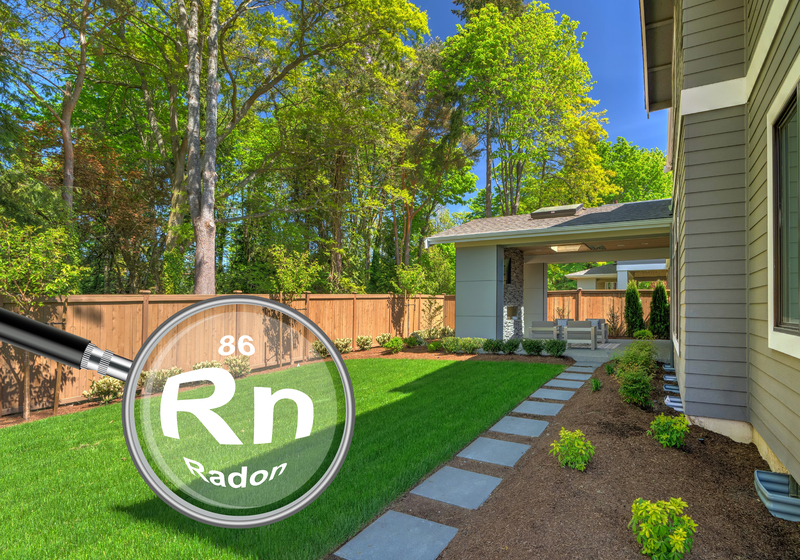
If you aren’t familiar with radon yet, now is the time to learn about this potentially deadly natural gas. Outside of smoking, radon is the number one cause for lung cancer in the US and Canada. One thing that separates radon from other lethal gases, however, is its uniquely subtle nature. radon is an odorless and colorless gas, created through a natural process of uranium deterioration in the soil. Everyone is affected by radon gas, but outside and in the open air, radon has room to freely dilute down to non-hazardous levels. Too frequently though, homes can restrict the space that radon needs to dilute into these safe levels. For Canada, the World Health Organization warns that homes with over 200 Bq/m3 of radon are unsafe and require immediate radon remediation. In the US, this guideline is even lower, at 4 pCi/L (or ~150 Bq/m3). (Check out the WHO’s recent coverage of the topic here.) While not all homes experience the same average volume of radon dilution, the US’s Environmental Protection Agency has published a zone map so that homebuyers can be aware of the overall trends in their area. Only a certified professional can be relied upon for an

Read More »

Maintenance Minutes: How To Locate Your Valve Shutoffs

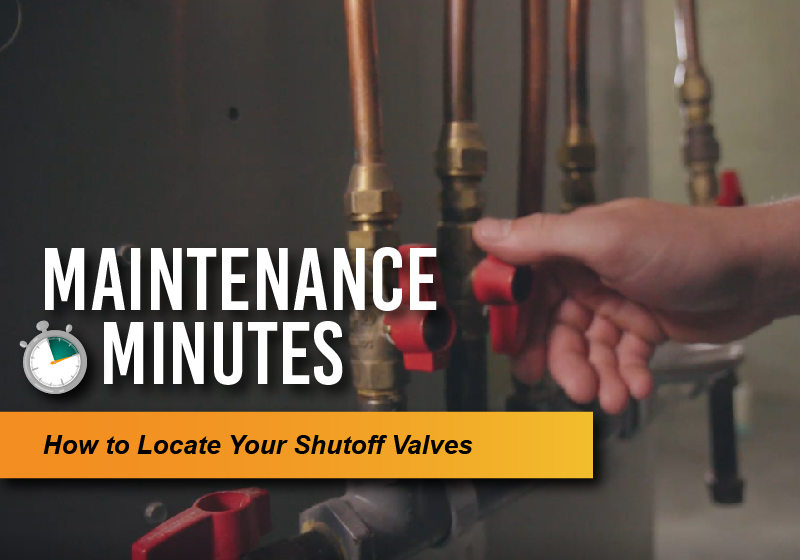
Each home is made up of a few key systems that every homeowner should be aware of. When needing to make a repair or renovations, knowledge of these systems will certainly come in handy. In the case of emergencies, it is even more important to familiarize yourself with these key systems before you need to act quickly. Water leaks have the potential to result in thousands of dollars in damage, and gas leaks can be even more dangerous. If you don’t know already, here are some quick tips for how to locate valve shutoffs for both your water line and your gas line. Locating Your Water Line Water lines run throughout houses, and their locations can vary considerably from house to house. One great way to set yourself in the right direction is to locate your water meter outside of your home. Near your front lawn or by the curb of your home, you should first locate the meter “box,” which can usually be identified by a dark-colored metal or plastic covering. Following that in a direct line to your house, you should find a circular water meter, likely also in your lawn. Your water shutoff valve should be located

Read More »

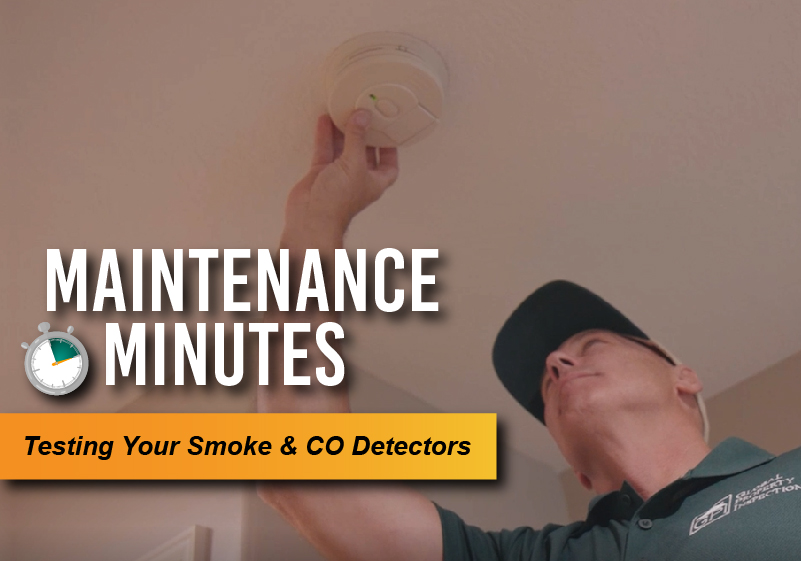
Maintenance Minutes: How to Test Your Smoke and Carbon Monoxide Detectors

Did you know you can cut risks related to carbon monoxide poisoning and fire hazards in half by following just a few helpful tips? The best part is that these recommendations can be completed on your own without the need to pay for additional services from a contractor. All you need is a foot stool or ladder and possibly a few batteries. Before we dive into carbon monoxide and fire prevention, let’s examine reasons why prevention is so important. The Importance of CO SafetyCarbon monoxide is particularly dangerous because it’s an” invisible gas,” meaning that it’s odorless, colorless, and is unseen to the naked eye. It prevents the oxygen in your body from circulating throughout your system properly, disrupting your respiratory system. Carbon monoxide is the byproduct of the fumes produced by fuel sources such as gasoline, coal, kerosene, and wood. The most common sources of carbon monoxide poisoning in homes come from unventilated space heaters, improperly connected water heaters, unclean fireplaces, vehicles that have been unintentionally left running in garages, and household appliances that are incorrectly connected. The onset of carbon monoxide poisoning happens very quickly. According to John Hopkins Medicine, carbon monoxide poisoning can occur in as little

Read More »

Getting Rid of Your Bad-Tasting Tap Water for Good

If you think you have bad-tasting or smelling water in your home, it may not be in your head. In some areas of the United States, tap water includes additives that you may have certain sensitivities or allergies to. While a few of these added chemicals serve a purpose, such as the addition of fluoride to help protect the enamel on your teeth, there is also unwanted waste that can sometimes end up in the water supply. Blended PipingAnother reason your current water system may be producing a bad taste or foul odor is the piping. For many newer homes, it can be an issue, as the piping leading to the tap is not a pure metal as was once used in older homes built prior to 1950. Today, it is standard practice to use piping that is a blend of metals and plastic such as polybutylene or polyethylene. This type of piping has the potential to cause an assortment of issues. These plastics can lead to problems, specifically for those with latex allergies. An additional issue with the usage of blended pipes is the addition of mold buildup. If mold builds up in the pipes it can not only

Read More »

Tiny Homes: A Forgotten Fad Or A Major Movement?

Where most look to trade up, tiny home-owners downsize and purge in order to follow this minimalist trend. For those wondering what the draw is and whether the movement has already passed by, here is a bit more information about the absolutely endearing tiny home.

Read More »

How To Improve Your Home’s Ventilation (And Why It’s Important)

Staying on top of a home’s upkeep can often feel like a full-time job. With every project checked off the list, oftentimes homeowners end up adding two more in a never-ending quest for home improvement. While some home maintenance and home upgrade projects can seem to add a lot to a homeowner’s plate, improving a home’s ventilation systems tends to eliminate many pesky household issues. What is Home Ventilation?Ventilation refers to the systems a home uses to cycle out pollutants and carry in fresh air, while also regulating a comfortable indoor environment. Older homes were able to get by with natural ventilation through windows, doors, and natural air leaks in walls and ceilings, but current systems are more sophisticated. The modern home has become much more air-tight than in the past in an attempt to improve energy efficiency. The side effects of these building philosophies have led to many new maintenance issues and even health problems for families. Homeowners who are unaware of the state of their house’s ventilation systems will benefit from a regular home systems inspection. Why is Ventilation Important?Poor ventilation leads to problems throughout the home. A home has two key contributors to pollutants and condensation: the

Read More »

What To Consider Before Getting A Pool

New homebuyers have so much to consider as they search for their dream home. Outside of architectural style, location, number of bedrooms, or whether it has a multi-car garage, homeowners need to be able to picture life within the house. Can they picture their kids playing in the backyard? Is this the type of place where they can see their family and friends wanting to come and visit? One amenity that has the ability to generate a great deal of excitement and ensure that a new home will be a gathering point for friends and family is the swimming pool. However, there are a lot of added responsibilities that come with managing and maintaining a pool. Whether you’re a homebuyer looking at a property with a pool, or you’re a homeowner who is thinking of making a dynamic addition to their home, here are a few things to consider before getting a pool. The Effects on Your ROIWhen making any major alteration to a property, homeowners should consider what impact that change will have on their property value. Even if the expectation is to stay in the same home for a long time, plans can change quickly! Although conventional wisdom

Read More »

Property Inspections Are Reaching New Heights With Drones

When students try to predict their future careers, they face a tall task. More likely than not, their future career probably doesn’t even exist yet! Technology is advancing at a breakneck pace, and as a result, workers are finding themselves in exciting new fields and industry standards are transforming every year. These new technologies give many professions brand new tools which allow them to accomplish things scarcely imagined in the past. In the property inspection industry, a tool that’s finding its way into many inspectors’ tool belts and may be revolutionizing the field is the drone. What Are Drones?Drones are a short-hand name used when referring to Unmanned Aerial Vehicles (or UAVs). This general term refers to an incredibly wide range of devices that have been used in various recreational activities, to capture footage for films, and even to perform reconnaissance in warfare. Though they started out as mostly a novelty when made available to the public, drones have quickly become a tool to aid various commercial enterprises. In the field of property inspections, drones are more lightweight than some of their industrial counterparts. Property inspectors are restricted to units weighing under 55 pounds, but most are under three pounds

Read More »

How To Stop Burglars In Their Tracks When You’re On Vacation

Between work, school, family, and friends, life gets busy! You work hard, and you deserve a nice long break from time to time. But leaving your home for an extended period of time can be stressful. After a relaxing trip, no one wants to return home to discover a break-in or a maintenance disaster. Taking some precautions prior to your time away is the best way to ensure you’ll have peace of mind to enjoy your vacation to its fullest! Recently, insurance experts at The Zebra compiled the latest statistics regarding burglaries in the United States. According to their research, 2.5 million burglaries occur annually in the U.S. In other words, there are new victims of home break-ins every 26 seconds. Solid home security should be a priority for all homeowners. The good news is that there are proven strategies to keep your home safe and your valuables secure while you take that next trip. Here are a few strategies every homeowner should consider to keep their home secure while it’s empty. Invest in a Security SystemThe best thing that any homeowner can do is to get a smart home security system. According to an article from Forbes, 83% of

Read More »

The Pros and Con(do)s of Buying A Condo

As people progress in their lives, chances are that they will experience a desire for increased ownership and investment in their living space. For many, this might mean a transition from an apartment to a traditional single-family home. Certainly, a traditional home has many potential draws for a first-time homeowner, but depending on priorities and interests, it would be a mistake not to consider a condominium. Condos are often regarded as a less expensive, more obtainable first home for young people. If you are in the market for home ownership, it would be valuable to review the pros and cons of buying a condo. But first, it’s important to develop a general understanding of how a condominium differs from an apartment or a traditional home. What Is A Condominium? A condominium is a residential complex consisting of separate units, each owned by their respective resident. Often abbreviated as simply “condos,” these units resemble apartments in some ways, often sharing walls with other units. Sometimes they are even located in highrise buildings, with units above or below one another. Condo owners are responsible for the upkeep of their units’ interiors, while they must join their condo’s association to collectively care for

Read More »

Home Features That Ward Off Radon: A Guide for Homebuyers

If you aren’t familiar with radon yet, now is the time to learn about this potentially deadly natural gas. Outside of smoking, radon is the number one cause for lung cancer in the US and Canada. One thing that separates radon from other lethal gases, however, is its uniquely subtle nature. radon is an odorless and colorless gas, created through a natural process of uranium deterioration in the soil. Everyone is affected by radon gas, but outside and in the open air, radon has room to freely dilute down to non-hazardous levels. Too frequently though, homes can restrict the space that radon needs to dilute into these safe levels. For Canada, the World Health Organization warns that homes with over 200 Bq/m3 of radon are unsafe and require immediate radon remediation. In the US, this guideline is even lower, at 4 pCi/L (or ~150 Bq/m3). (Check out the WHO’s recent coverage of the topic here.) While not all homes experience the same average volume of radon dilution, the US’s Environmental Protection Agency has published a zone map so that homebuyers can be aware of the overall trends in their area. Only a certified professional can be relied upon for an

Read More »

Maintenance Minutes: How To Locate Your Valve Shutoffs

Each home is made up of a few key systems that every homeowner should be aware of. When needing to make a repair or renovations, knowledge of these systems will certainly come in handy. In the case of emergencies, it is even more important to familiarize yourself with these key systems before you need to act quickly. Water leaks have the potential to result in thousands of dollars in damage, and gas leaks can be even more dangerous. If you don’t know already, here are some quick tips for how to locate valve shutoffs for both your water line and your gas line. Locating Your Water Line Water lines run throughout houses, and their locations can vary considerably from house to house. One great way to set yourself in the right direction is to locate your water meter outside of your home. Near your front lawn or by the curb of your home, you should first locate the meter “box,” which can usually be identified by a dark-colored metal or plastic covering. Following that in a direct line to your house, you should find a circular water meter, likely also in your lawn. Your water shutoff valve should be located

Read More »

Maintenance Minutes: How to Test Your Smoke and Carbon Monoxide Detectors

Did you know you can cut risks related to carbon monoxide poisoning and fire hazards in half by following just a few helpful tips? The best part is that these recommendations can be completed on your own without the need to pay for additional services from a contractor. All you need is a foot stool or ladder and possibly a few batteries. Before we dive into carbon monoxide and fire prevention, let’s examine reasons why prevention is so important. The Importance of CO SafetyCarbon monoxide is particularly dangerous because it’s an” invisible gas,” meaning that it’s odorless, colorless, and is unseen to the naked eye. It prevents the oxygen in your body from circulating throughout your system properly, disrupting your respiratory system. Carbon monoxide is the byproduct of the fumes produced by fuel sources such as gasoline, coal, kerosene, and wood. The most common sources of carbon monoxide poisoning in homes come from unventilated space heaters, improperly connected water heaters, unclean fireplaces, vehicles that have been unintentionally left running in garages, and household appliances that are incorrectly connected. The onset of carbon monoxide poisoning happens very quickly. According to John Hopkins Medicine, carbon monoxide poisoning can occur in as little

Read More »

Getting Rid of Your Bad-Tasting Tap Water for Good

If you think you have bad-tasting or smelling water in your home, it may not be in your head. In some areas of the United States, tap water includes additives that you may have certain sensitivities or allergies to. While a few of these added chemicals serve a purpose, such as the addition of fluoride to help protect the enamel on your teeth, there is also unwanted waste that can sometimes end up in the water supply. Blended PipingAnother reason your current water system may be producing a bad taste or foul odor is the piping. For many newer homes, it can be an issue, as the piping leading to the tap is not a pure metal as was once used in older homes built prior to 1950. Today, it is standard practice to use piping that is a blend of metals and plastic such as polybutylene or polyethylene. This type of piping has the potential to cause an assortment of issues. These plastics can lead to problems, specifically for those with latex allergies. An additional issue with the usage of blended pipes is the addition of mold buildup. If mold builds up in the pipes it can not only

Read More »